

Discover why Dhul-Qarnayn represents a divine template rather than a single figure. This deep dive compares Alexander the Great and Cyrus the Great through archaeological evidence and Quranic scripture. Explore how these “Two Horns” shaped the ancient world and inspired the historical novel, DOGMA.
The Unshakable Evidence of the West
For years, I researched the chapters of my historical thriller, DOGMA. During that time, I felt certain of one specific identity. I believed the enigmatic figure of Dhul-Qarnayn mentioned in Surah Al-Kahf was Alexander the Great.
The archaeological evidence seemed completely unshakable. I held the “smoking gun” of antiquity in my own hand—a silver tetradrachm of Lysimachus. This ancient coin depicts Alexander as more than just a conqueror. It shows him as the son of Zeus-Ammon, adorned with two prominent ram horns. To the ancient Mediterranean world, many knew Alexander as Iskandar Dhul-Qarnayn, the Master of the Two Horns.
In my novel DOGMA, I devoted an entire section to his legacy. I explored how his rapid march acted as a “divine plow”. He broke the hard soil of the ancient world and facilitated the expansion of the People of the Book. By spreading Koine Greek across thousands of miles, he created an ancient internet. This linguistic network allowed the later messages of the Prophets to travel with lightning speed across every border.
The Quranic Template of Righteous Power
To understand the weight of this sacred title, we must look at the scripture itself. The Quran provides a clear description of this legendary traveler—a man given power and means by his Creator:
“They ask thee concerning Zul-qarnain. Say, ‘I will rehearse to you something of his story.’ Verily We established his power on earth, and We gave him the ways and the means to all ends. One (such) way he followed, until, when he reached the setting of the sun, he found it set in a spring of murky water… Then followed he (another) way, until, when he came to the rising of the sun, he found it rising on a people for whom We had provided no coverage against the sun.” (Quran 18:83-90)
This journey from West to East defines an archetype of righteous leadership. It depicts a king who establishes justice wherever he travels. However, history reveals another candidate who fits this description just as strikingly as Alexander.
The Mirror in the East: Cyrus the Great
As I continued my deep-history research, a shadow emerged from the East. This shadow looked remarkably like a mirror image of Alexander. I began to look much closer at Cyrus the Great, the founder of the Achaemenid Empire.
Alexander is famous for the ram’s horns on his coinage. However, the most striking physical evidence for Cyrus stands at Pasargadae in modern-day Iran. There, a monumental stone relief depicts a four-winged figure wearing a complex Hemhem crown. This crown features three sun disks set atop two prominent horizontal ram horns.
This iconography is stunning. Cyrus literally united the “two horns” of the Median and Persian empires. While Alexander’s coin imagery was singular, Cyrus’s relief provides a physical representation of the Two Horns standing at the heart of his capital.
Overlapping Empires and Geopolitical Paths
Alexander charged aggressively from the West, but centuries earlier, Cyrus had marched from the East. If you overlay a map of the Persian Empire with Alexander’s later conquests, the territorial match is staggering. They ruled nearly the exact same lands, commanded the same diverse tribes, and reached the edges of their known worlds. Both rulers sought to unify disparate cultures under one supreme law.
Yet Cyrus holds a title that even Alexander could never claim. In the Hebrew Bible, Cyrus is the only non-Jewish ruler called “Messiah” (Anointed). His deeds went far beyond standard military conquest. He was an active protector of faith. He ended the Babylonian Captivity, returned the People of the Book to their holy lands, and financed the rebuilding of the Second Temple in Jerusalem.
The Silent Partner in Pasargadae
In the sun-bleached plains of southwestern Iran stands a simple limestone tomb that has survived 2,500 years of earthquakes and invasions. This is Pasargadae, the silent witness to an ancient global reboot. Founded in the 6th century BC, this site served as the first capital of the Achaemenid Empire and remains a UNESCO World Heritage monument.
The site returned to the world stage in October 1971. The last Shah of Iran chose these ruins to celebrate the 2,500th anniversary of the Persian Empire. Standing before the tomb, he declared, “Rest in peace, for we are awake.” Beyond modern political theater, Pasargadae stands as a enduring symbol of identity.
Even Alexander recognized this immense historical debt. History records that when Alexander conquered Persia, he visited Cyrus’s tomb at Pasargadae with deep reverence. He stood in awe of the man who had paved the way for the very concept of a world king.
Sacred Landmarks of Ancient Persia
Modern Iran preserves some of humanity’s most astonishing archaeological treasures. Beyond the gabled tomb at Pasargadae, travelers can stand before the colossal monumental staircases of Persepolis, the grand capital built by Darius the Great. Nearby, the dramatic cliffside tombs of Naqsh-e Rostam display monumental royal reliefs carved directly into towering rock faces. Further south, the ancient city of Yazd showcases millennia-old mud-brick architecture alongside sacred Zoroastrian fire temples that have burned continuously for centuries.
These enduring stone monuments remind us of our shared human story. As global tensions fluctuate, we hold onto the earnest hope that lasting peace will return to the region. May mankind soon walk freely among these majestic grounds once again to witness the birthplaces of world history in person.
Structural Hardware vs. Spiritual Software
We can view these two monarchs as two sides of the same historical coin. Alexander’s primary contribution was structural. He unified the world through language, roads, and urban infrastructure. Before Alexander, the Mediterranean consisted of isolated city-states. After him, a merchant could travel from Greece to India using a single shared language. He built the physical hardware of civilization.
Conversely, Cyrus provided the spiritual software. He issued the famous Cyrus Cylinder, widely recognized as one of the earliest charters of human rights. He permitted conquered nations to practice their own religions and protected the sanctity of conscience. While Alexander spread the common tongue, Cyrus preserved the sacred spirit. He ensured that the People of the Book survived the Babylonian crisis. Without Cyrus, the lineage of the Prophets in Jerusalem might have been extinguished.
The Barrier and the Iron Gate
The Quranic account of Dhul-Qarnayn reaches its narrative peak at the iron barrier. He constructs a massive wall to protect a vulnerable population from the chaotic forces of Gog and Magog:
“Bring me blocks of iron.” At length, when he had filled up the space between the two steep mountainsides, He said, “Blow (with your bellows)”… Thus, were they made powerless to scale it or to dig through it. (Quran 18:96-97)
Both monarchs match this description. Historical accounts link Alexander to the famous “Gates of Alexander” in the Caucasus Mountains. Similarly, Cyrus constructed massive northern fortifications to shield his agricultural empire from aggressive steppe nomads. Both kings fulfilled the vital archetype of the “Wall Builder” who defends civilization from wilderness chaos.
Why the Sacred Text Withholds Names
As an author, I initially felt a pang of guilt for leaving Cyrus out of the primary spotlight in DOGMA. Now, I understand the profound Divine Wisdom behind Surah Al-Kahf. The text purposely omits specific names like Iskandar or Kurus.
By utilizing the title Dhul-Qarnayn, the scripture transcends any single mortal biography. It defines a divine template for righteous authority. The Quran leaves the name open so we can recognize how justice was established across eras by different leaders.
Alexander represents the Western horn of expansion and language. Cyrus represents the Eastern horn of liberation and tolerance. Together, they form the complete manifestation of the Two Horns. One king plowed the field, while the other king protected the seeds.
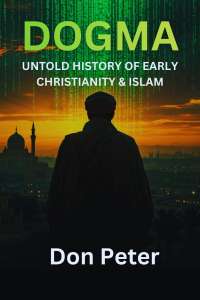
Click to Purchase DOGMA
The Living Mystery in DOGMA
This dual identity is not an oversight of history. Instead, it serves as a deliberate breadcrumb for researchers and readers. In DOGMA: Untold History of Early Christianity & Islam, the protagonists follow a trail that initially points toward the traditional Alexander narrative. Yet, the quiet shadow of Cyrus remains a powerful, driving force in the background.
This ambiguity creates the perfect foundation for historical suspense. When you explore this narrative, you are not simply reading fiction. You are uncovering the same deep, intentional mysteries that have fascinated scholars for generations.
The title of Dhul-Qarnayn does not belong to a single man. It belongs to a timeless legacy of justice, travel, and divine purpose. Whether through the Macedonian or the Persian, the result remained the same: the world was prepared for the light of truth.
Unlocking the Hidden Sacred Lineage
My earlier work, The Viceroys of God (available in ebook as God’s Viceroys), lays the vital foundation for this historical mystery. The narrative delves deep into the sacred lineage and spiritual custodians who guarded divine truth through centuries of empire and turmoil. By exploring these prophetic caretakers, the story bridges the crucial gap between ancient Near Eastern rulers and the rise of early monotheism. Readers who experience this book gain the essential historical roadmap needed to fully grasp the world-shaking revelations inside DOGMA.
The Journey Continues
The silent stones of the ancient world continue to speak across the millennia. They urge us to study their structural triumphs and failures before our own modern empires face a similar decline.
Want to stay connected with the research, stories, and ongoing debate?
 Join the Discussion on Substack
Since this pillar post doesn’t feature a comment box, Substack is the best place to share your thoughts, ask questions, and join the conversation directly with me.
 Follow the Creative Process on Medium
Read my regular historical insights, character sketches, and reflections on the creative writing journey.