
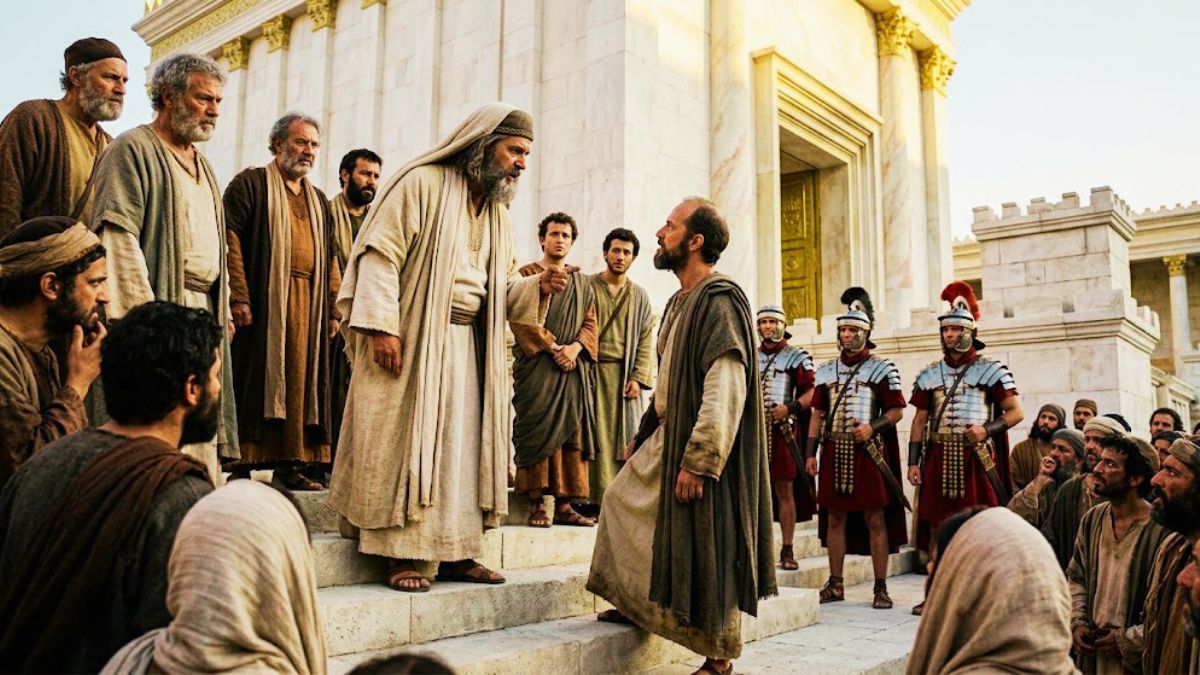
Discover the untold history of the Nazarene movement, from Jesus and James the Just to the clash with Paul. Uncover the raw politics behind the Second Temple economy, the Dead Sea Scrolls, and how early prophetic monotheism ultimately echoed across centuries through the historical Believers’ Movement.
The Hidden World of the Nazarene Roots
Conventional Christianity centers on the birth, death, and resurrection of Jesus. For most believers, these events form the backbone of their faith. However, modern biblical scholars suggest a deeper path to understanding this great teacher. They argue that we must look beyond the dogma and into the raw history of the man himself.
Who was Jesus? During his lifetime, credible sources remained scarce. History usually forgets peasants with no royal titles or military fame. Yet, Rome eventually co-opted his name to build an imperial religion. We must ask: was this his actual mission?
Sifting Through the Ruins
Since records from his lifetime are rare, scholars use two specific tactics. First, they sift through ancient manuscripts for new interpretations. Second, they hunt for archaeological evidence.
They have found plenty. Archaeologists discovered an inscription mentioning Pontius Pilate, the Prefect of Judea. Even more spectacular are the ruins of Sepphoris. This Greco-Roman capital of Galilee stood just four miles from Nazareth.
The Education of a Carpenter
This proximity changes everything. A carpenter in tiny Nazareth would struggle to put food on the table. However, a carpenter working in the booming city of Sepphoris makes perfect sense.
Jesus and his father, Joseph, likely worked in this bilingual city. To survive in Sepphoris, one needed to speak Greek and Latin alongside Aramaic and Hebrew. This environment explains why the scriptures describe Jesus as an educated man.
The Brutal Reality of Rome
The Gospels often paint Roman rule as tranquil. History tells a darker story. The Romans were brutal. They enforced harsh taxes and crushed dissent. They crucified anyone they perceived as a threat.
The Jewish people lived under constant repression. Naturally, they longed for a Messiah to deliver them. The Dead Sea Scrolls, discovered in 1947, even suggest they expected two Messiahs.
The Mentor and the Protege
History gave them two: John the Baptist and his cousin, Jesus. Conventional scholars describe John as a lonely hermit. Yet, the Qumran scrolls expose a fiery messianic movement that anticipated an apocalyptic clash: the “Sons of Light” rising against the “Sons of Darkness”—a clear code for Roman rule.
The Gospels claim Jesus and John only met once at the baptism. This seems unlikely. These men were cousins. John was likely the mentor, and Jesus was his protege.
The Battle Cry and the Roman Response
Most people imagine Jesus as a peaceful figure who taught his followers to “turn the other cheek.” Yet, the Gospels contain startling contradictions. In one passage, he commands his followers to slay his enemies before him (Luke 19:27). In another, he tells those without a sword to sell their cloaks to buy one (Luke 22:36).
These are not figurative phrases. They are the words of a man living in an occupied territory. While John the Baptist prepared the way, Jesus likely prepared the movement. This was a battle cry. If the Jewish people rallied behind them, the “Sons of Light” could finally crush the “Sons of Darkness.”
The Fall of the Mentor
The Romans never waited for a rebellion to start. They preferred to cut off the head of the movement—literally.
The Gospel says Herod Antipas arrested and beheaded John the Baptist. Traditionally, we are told Herod acted because John criticized his marriage to his brother’s wife, Herodias. While Herod was certainly offended, a personal insult rarely led to an official execution in the Roman world.
The Collaboration of Power
There is a deeper political layer here. Herod Antipas served as a “Client King.” He kept his power only by keeping the peace for Rome. John was not just a critic; he was a popular leader with a growing following. To Rome and its collaborators, any large gathering of Jews under a charismatic leader looked like a riot in the making.
Furthermore, only the Roman authorities held the legal power of Ius Gladii—the right of the sword. This meant only the Romans could authorize a capital execution. Herod likely acted as the “enforcer” for Roman interests. He removed a perceived revolutionary before the spark could become a fire.
The Rejection and the Road to Jerusalem
The execution of John the Baptist changed everything. Jesus lost his mentor and his shield. Distraught and alone, he shouldered the mission. The Gospels describe a man mourning a deep loss while trying to rally a leaderless movement.
Jesus returned to his hometown in Galilee. He brought a few dedicated followers and entered the local synagogue. He delivered a sermon that should have ignited a revolution. Instead, the congregation turned on him. They didn’t just disagree; they tried to throw him over a cliff.
The Limits of Miracles
This moment reveals a harsh reality. Despite the miracles—healing the blind and raising the dead—the people of Galilee largely rejected him. They saw the “carpenter’s son,” not a revolutionary leader.
John the Baptist possessed a unique charisma that could sway the masses of the countryside. Without John, Jesus found himself hitting a wall. He realized that Galilee would not be the birthplace of the Kingdom.
The Strategic Shift
Jesus made a bold decision. If the rural population refused to listen, the battle had to move to the center of power. Turning toward Jerusalem, he sought out the educated elites and Passover pilgrims who might grasp his apocalyptic mission. This journey went far beyond routine prayer; it was an intentional escalation to continue John’s work and force an open confrontation with the temple authorities.
The Triumph and the Trap
The Gospels describe his entry into Jerusalem as a victory. Jesus rode a donkey in triumph, fulfilling ancient prophecies. The crowds cheered. They waved palm branches and chanted “Hosanna,” a cry for salvation from the Psalms.
For a brief moment, it seemed the plan worked. The people celebrated. The Kingdom of Heaven appeared to be within reach. But beneath the cheers, the Roman garrison and the temple elites were watching. Jesus had walked directly into the lion’s den.
The Corrupt Temple Economy and the Final Clash
The Desert Resistance and the Corrupted Altar
Many devout Jews viewed the Second Temple with profound disgust. The ruling Sadducean priesthood had replaced the purity of the Shema—loving the One God with total devotion—with ritualistic animal slaughter and heavy commerce. Consequently, the faithful remnant groups like the Essenes fled into the Judean wilderness and Qumran.
They rejected the hierarchy in Jerusalem, abandoned animal sacrifices, and waited for a divine intervention. Both John the Baptist and Jesus drew directly from this group mindset. They sought to gather the lost sheep of Israel and restore true spiritual obedience over mechanical rituals.
The Temple Banking Monopoly
Beyond worship, the Second Temple functioned as the primary central bank and economic hub of the ancient Levant. Jewish law required every adult male pilgrim to pay an annual half-shekel temple tax during Passover. However, priests rejected standard Roman coins bearing pagan imperial imagery.
Pilgrims had to exchange their daily currency for the approved Tyrian silver shekel. Money changers charged exorbitant transaction fees at every table. Furthermore, temple inspectors regularly disqualified privately brought livestock for alleged blemishes, forcing pilgrims to buy expensive, pre-approved sacrificial animals directly inside the Court of the Gentiles.
The Shadow of the Antonia Fortress
This lucrative enterprise generated immense wealth, which the Sadducean aristocracy and the Roman prefecture split through tribute and administrative control. Therefore, Rome stationed elite cohorts inside the Antonia Fortress, a massive military garrison built directly onto the northwest corner of the Temple Mount.
Roman guards constantly patrolled its high stone towers. They did not monitor the plaza to protect pilgrims. Instead, they watched to protect the temple treasury and instantly suppress any riots that threatened imperial revenue.
Overturning the Tables of Power
Jesus recognized that a spiritual revival required dismantling this exploitative machinery. Compelled by his prophetic mission, he entered the Court of the Gentiles and took direct physical action. He overturned the heavy wooden tables of the currency brokers, scattered their silver coins across the pavement, and drove out the livestock merchants with a whip of cords.
This bold act disrupted the primary cash flow of the high priest, Caiaphas. By halting commerce, Jesus instantly placed himself in the crosshairs of both the Sanhedrin and Pontius Pilate.
Betrayal, Despair, and the Broken Movement
The Midnight Kangaroo Court
Following the temple disruption, Jesus failed to ignite a widespread popular revolt among the Passover crowds. Realizing the danger, the temple authorities moved swiftly before the festival concluded. They orchestrated a clandestine nighttime arrest in Gethsemane with the help of Judas. The priests quickly assembled an illegal midnight tribunal.
They charged him with religious blasphemy and threats against the sanctuary, yet the real motive remained entirely political. To appease Pilate and protect their own lucrative alliance with Rome, the high priests delivered Jesus as a seditious agitator claiming kingship.
The Despair in Gethsemane
Before his capture, the weight of the unraveling mission crushed Jesus. In the Garden of Gethsemane, he threw himself facedown onto the cold earth, weeping in profound distress. He pleaded earnestly, asking that this cup of suffering pass from him if possible.
This agonized prayer reflected raw human desperation rather than calm resignation. His mentor had perished, his disciples were scattering, the masses had failed to rise, and the imperial war machine was closing in.
The Execution and Aftermath
Pilate ordered the standard Roman penalty for political treason: public crucifixion. Soldiers nailed Jesus to a cross outside the city walls. While mainstream dogma asserts he died on Golgotha, alternative historical traditions suggest intriguing possibilities.
Some theories propose he survived the ordeal and fled westward with Mary Magdalene toward Europe, while other eastern legends trace his later journey along the Silk Road toward Kashmir.
Regardless of his physical fate, his shared revolutionary campaign with John the Baptist had collapsed in Jerusalem.
James the Just and the Rise of Paul
The Leadership of the Way
The execution of Jesus did not extinguish the underground resistance. His biological brother, James the Just, immediately took command of the Jerusalem assembly, known simply as “The Way.” James retained strict Jewish observances, practiced ascetic devotion, and kept the community anchored at the Temple. They believed Jesus was the expected prophet and anticipated a coming Paraclete or divine deliverer who would decisively defeat the Sons of Darkness and establish God’s reign on earth.
The Damascus Conversion
Soon, a fierce persecutor targeted this fragile Nazarene faction. Saul of Tarsus, a zealous Pharisee, actively tracked down members of The Way to eliminate their influence. However, on the desert road to Damascus, Saul claimed to experience a sudden blinding vision that altered his entire trajectory. Perhaps pretending that the risen Messiah had appointed him directly, he temporarily abandoned his mission of persecution, adopted the name Paul, and claimed apostolic authority over the Gentiles.
The Clash Between Apostles
Paul traveled directly to Jerusalem hoping to integrate himself with the leadership, yet James and the original Nazarene elders met him with intense suspicion. They remembered his violent history and opposed his radical idea of dropping Torah requirements for new converts. To prevent a catastrophic internal schism, James compromised. He assigned Paul to missionary territories far outside Judea, effectively dispatching this controversial new convert to the Hellenistic world while the original Nazarene movement remained rooted in Jerusalem.
The Rift and the Rival Gospel
Reports from the Hellenistic Front
Relieved that Paul had departed Jerusalem, James and the elders focused on consolidating the Nazarene movement around the Temple. However, unsettling reports soon reached the Jerusalem assembly. Word arrived from Antioch, Galatia, and Corinth that Paul had completely abandoned the terms of their agreement.
Instead of preaching the strict obedience to Torah that James demanded, Paul taught Gentile converts that the Law of Moses was obsolete, circumcision was unnecessary, and dietary laws no longer mattered.
The Clash of Two Gospels
For James the Just, this was an intolerable betrayal. To the Jerusalem Nazarenes, Jesus had come to purify and uphold the Law, not destroy it. Paul, however, crafted an entirely new theology tailored for the Greco-Roman world. He shifted the focus from following God’s commandments to simply having faith in a crucified and resurrected divine savior.
The movement fractured into two irreconcilable camps: the original Jewish Nazarenes under James in Jerusalem, and a rapidly expanding Pauline branch across the Roman Empire.
The Infiltration of Antioch
The Infiltration of Antioch
Alarmed by these developments, James dispatched his own emissaries—strict adherents known in historical texts as “the men from James”—to Paul’s base in Antioch. Their arrival threw the local assembly into turmoil.
Intimidated by their strict stance on the Law, Peter immediately withdrew from fellowship with the Gentile believers. Seeing this retreat, Paul confronted Peter to his face in front of the entire assembly, bitterly accusing him of hypocrisy. Paul openly rejected the authority of the Jerusalem delegates, permanently deepening the rift between the original pillars and the rogue apostle.
The Council of Jerusalem
To prevent total fracture, the two sides convened at the Council of Jerusalem around 48–50 CE. James held the supreme judicial authority as the leader of the mother church. While he granted a reluctant concession allowing Gentile converts to avoid full circumcision, he strictly demanded they abstain from idolatry, sexual immorality, and unkosher meat.
Yet once Paul left the city gates, he continued preaching his radical gospel of total freedom from the Torah, effectively laying the groundwork for a new religion separate from Judaism.
The Final Trap on the Temple Mount
Years later, Paul returned to Jerusalem with funds collected from foreign churches. Tensions among the Nazarene zealots had reached a boiling point. To prove his loyalty to the Torah and calm the furious populace, James ordered Paul to undergo a public purification ritual in the Second Temple.
The plan backfired completely. Hostile crowds recognized Paul, accused him of bringing Gentiles into the holy precincts, and incited a violent riot. Roman soldiers rushed down from the Antonia Fortress, arrested Paul to prevent a lynching, and took him into imperial custody—permanently severing his connection to the Jerusalem Nazarenes.
The Fragmented Nation and the Martyrdom of James
The Fractured Jewish Factions
Paul was not James’s only burden. Meanwhile, Judea descended into violent internal chaos. James desperately tried to unite the Jewish nation under God’s law. Instead, rival factions tore Jerusalem apart from within. For instance, the aristocratic Sadducees clashed violently with the populist Pharisees.
Furthermore, radical Zealots assassinated anyone who compromised with Rome. Urban Sicarii daggers struck down rivals in broad daylight. Thus, fraternal hatred consumed the holy city.
The Fall from the Temple Pinnacle
Consequently, the corrupt temple authorities targeted James directly. In 62 CE, High Priest Ananus ben Ananus exploited a sudden Roman power vacuum. He dragged James to the summit of the Temple walls. The priests demanded that James denounce Jesus publicly. Instead, James boldly declared Jesus as the coming divine deliverer. Therefore, furious temple guards hurled him down into the rocky valley below. James survived the devastating fall and began praying for his executioners. Immediately, a violent zealot crushed his skull with a fuller’s club.
A Tale of Two Successors
James vs Abu Bakr Paradoxically, history repeated this exact crisis six centuries later in Arabia. Following the death of a founding prophet, a successor faced complete communal collapse. James inherited a fractured movement surrounded by hostile sectarian tribes. He ultimately perished without securing political unity or state power.
In stark contrast, Abu Bakr al-Siddiq confronted identical centrifugal forces after the Prophet Muhammad died. When rebel tribes apostatized and withheld allegiance, Abu Bakr launched decisive consolidation campaigns.
The Establishment of the Divine Realm
As a result, Abu Bakr decisively crushed tribal rebellion during the Ridda Wars. Instead of building an exclusive regime, he united Arabia under the broad Mu’minun (Believers’) Movement. This early coalition mirrored the original Nazarene community with astonishing accuracy.
Furthermore, his Rightly Guided successors systematically dismantled both the Roman and Sasanian empires. James saw his Jerusalem flock scatter into the desolate wilderness of Pella. Conversely, Abu Bakr successfully established the sovereign Kingdom of God on Earth where the Jesus Movement had tragically faltered. Thus, the ancient prophetic mission finally achieved complete political and spiritual victory.
Unraveling the Truth in DOGMA
To discover what might have happened if John and Jesus had succeeded, explore my historical fiction novel, DOGMA. The story follows two rival scientists determined to prove each other wrong. Through advanced time travel, they journey directly into the ancient Levant. However, witnessing raw historical events firsthand shatters their assumptions, exposing centuries of manufactured dogma.
The Destiny of the Nazarene Movement
Meanwhile, the true legacy of the Nazarene movement did not vanish with the fall of Jerusalem. Instead, its revolutionary monotheistic vision quietly shifted into the desert sands, awaiting its final historical revival. To trace where these scattered believers fled next, read article, The Masada Mystery.

DOGMA by Don Peter — Click the cover to get your copy
The Journey Continues
The silent stones of the ancient world continue to speak across the millennia. They urge us to study their structural triumphs and failures before our own modern empires face a similar decline.
Want to stay connected with the research, stories, and ongoing debate?
 Join the Discussion on Substack
Since this pillar post doesn’t feature a comment box, Substack is the best place to share your thoughts, ask questions, and join the conversation directly with me.
 Follow the Creative Process on Medium
Read my regular historical insights, character sketches, and reflections on the creative writing journey.