
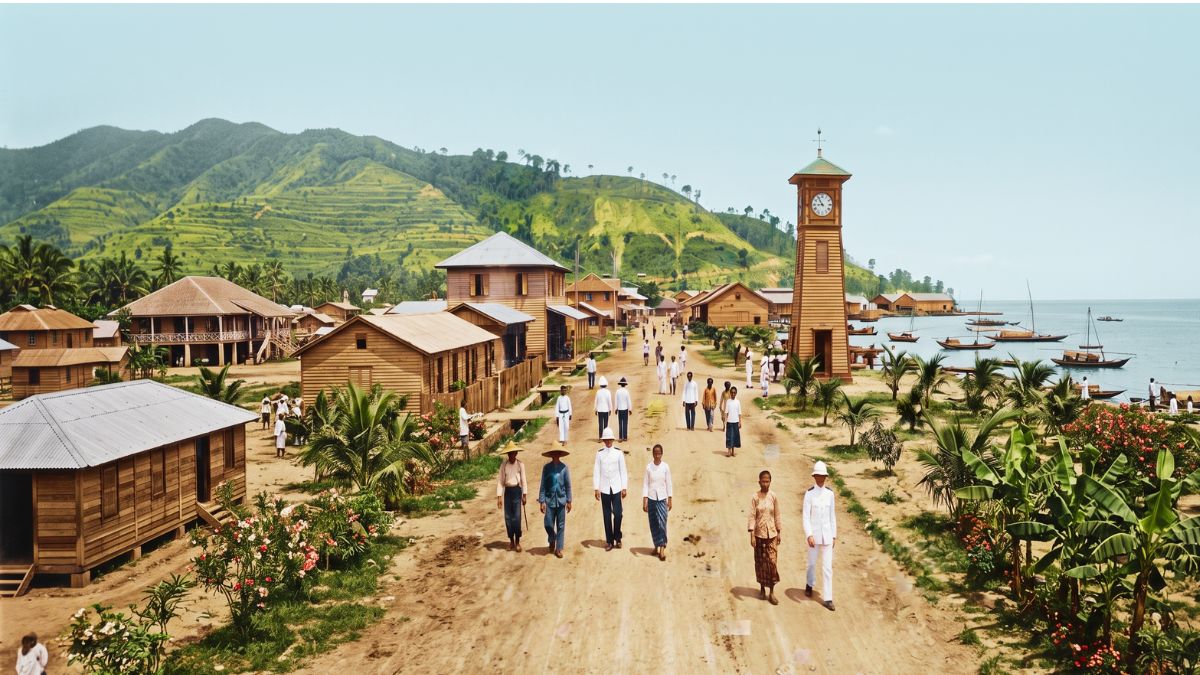
Explore the hidden history of Jesselton, the original gateway to North Borneo. From the fires of Gaya Island to the Hakka farms of Signal Hill, this guide explores the heritage behind the modern city. Discover how the setting of the novel The Eurasians preserves the soul of North Borneo.
Author Don Peter bridges pristine wilderness travel with rich historical storytelling across Sabah’s coastal reefs and ancient jungle trails. Uncovering forgotten colonial settlements and wartime memorials transforms a simple tropical getaway into a profound cultural discovery. Discover how these real-world Bornean adventures directly spark the pages of The Eurasians. Read the full journey From Borneo Travel Writer to Historical Fiction Author on the main master hub.
Jesselton: The Resilient Soul of North Borneo
Most modern maps point to Kota Kinabalu. However, for those who value heritage, the name Jesselton carries a weight that the modern title lacks. The official name change occurred on September 30, 1967. To many, this transition remains a point of deep nostalgia.
In my historical-romance thriller, The Eurasians, I made a conscious choice. I refused to use the modern names. I insisted on calling the land North Borneo and the capital Jesselton. To do otherwise would strip the story of its historical soul.
The Man Behind the Name: Sir Charles Jessel
Who was Jessel? The city takes its name from Sir Charles James Jessel. He served as the Vice-Chairman of the British North Borneo Chartered Company (BNBCC).
Interestingly, Sir Charles was a financier, not an explorer. He likely never set foot in the town that bore his name. Yet, his influence shaped the administrative backbone of the region. The British established Jesselton in 1899 to replace an older, ill-fated settlement.
The Fire at Gaya Island: Birth of a Mainland Hub
In the late 1800s, Jesselton was not the main hub. The British administrative center sat on Pulau Gaya, a nearby island. Today, tourists flock there for luxury resorts and diving. In 1897, the scene was far more violent.
A rebel leader named Mat Salleh led a fierce attack on the settlement. His group burnt the British post to the ground. Consequently, this destruction forced the British to move to the mainland. They chose a narrow strip of land protected by a mountain range. That site became Jesselton.
The Changing Face of Signal Hill
History often leaves scars on the land. During British rule, Signal Hill looked nothing like it does today. Photographs from the era show a barren landscape. Massive tree cutting for timber and construction stripped the hills around the Atkinson Clock Tower.
Nature eventually reclaimed the slope. Today, Signal Hill serves as a vital “green lung.” A lush secondary forest covers the hillside. However, new threats loom. Modern development pressure is high. The present government often favors expansion over conservation. We risk losing this beautiful hillside forest to the bulldozer once again.
The Atkinson Clock Tower: A Surviving Beacon
This tower stands as the oldest standing structure in Jesselton. Built in 1905, this all-wood landmark honors Francis George Atkinson, the first District Officer of Jesselton. He tragically died of “Borneo Fever” at the young age of 28.
For decades, the tower served a vital role for sailors. Its steady light acted as a primary navigation beacon for ships entering the harbor. Since it survived the heavy bombings of World War II, it remains a rare symbol of pre-war North Borneo heritage.
However, the tower’s setting has changed dramatically. To breathe new life into the site, authorities recently launched an ambitious upgrade. They constructed a modern pedestrian walkway and a scenic hanging bridge that connects the tower directly to the Signal Hill Observation Pavilion.
Instead of viewing the tower from the busy street below, visitors now walk through the canopy of the secondary forest. This elevated path offers a “bird’s eye view” of the clock face and the city skyline.
Furthermore, this connection links the tower to the Signal Hill Eco-Farm and the surrounding heritage trails. By merging colonial architecture with nature-based tourism, the city creates a seamless experience for the “History Man” and casual tourists alike. This bridge literally spans the gap between Jesselton’s past and its green future.
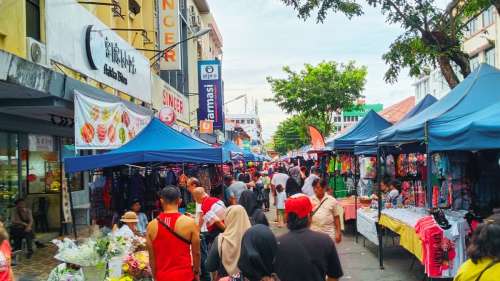
Vibrant energy, local crafts, and rich history along the historic shoplots of Gaya Street
From Bond Street to Gaya Street: The Heartbeat of Heritage
Stepping down from Signal Hill brings you straight to historic Gaya Street, originally named Bond Street during the colonial era. This iconic strip feels both timeless and vibrant. Historic shoplots host charming modern cafes, cozy artisan bakeries, and souvenir shops selling handcrafted Bornean crafts. Every Sunday, the street transforms into a bustling open-air market where history meets modern local life.
The Hakka Legacy: The Vegetable Basket
Behind Signal Hill lay the “vegetable basket” of the town. This area supplied fresh produce to early residents. The Hakka Chinese farmers made this possible. They followed the British to North Borneo, bringing their legendary work ethic.
These farmers transformed the rugged terrain into productive gardens. They ensured the townfolk never went hungry. Their legacy lives on in the pockets of green still found within the urban sprawl.
Modern Echoes of the Farm and Wetland Edges
The old Hakka vegetable farms have evolved. The Signal Hill Eco-Farm now occupies that space. They serve organic products and home-cooked meals. You can walk through the restaurant and observe fish ponds directly beneath your feet. It is a rare connection to the town’s agricultural roots.
Nearby, the Green Cottage Cafe offers a different rhythm. It is a sanctuary for birdwatchers. During the right season, the air hangs heavy with the scent of Durian, Tarap, and Jackfruit. It is a place where nature and nostalgia meet.
Nature lovers should also visit the Kota Kinabalu Wetland Centre. This protected mangrove forest is essential for Borneo’s native birds. You can walk along the wooden boardwalks that cut through the thick mangroves. Watch the mud closely to spot mudskippers or endangered wildlife.
Be careful near the nearby 9-hole golf course. Poisonous snakes occasionally sun themselves near the short par-3 holes. This is the wild edge of Jesselton.
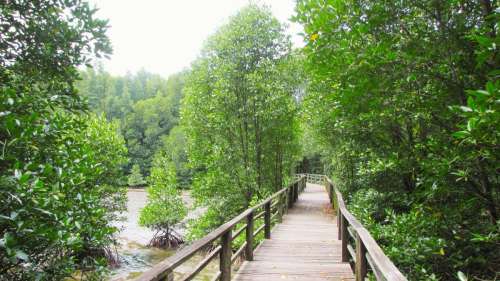
A peaceful stroll through the lush mangrove canopy at the Kota Kinabalu Wetland Centre
Tanjung Aru: From Empire Fortress to Coastal Paradise
Moving south along the coast reveals Tanjung Aru, a shore steep in military history. Following the Malaysia Agreement of 1963, North Borneo gained independence through Malaysia. Shortly after, the Indonesian Confrontation erupted. In 1964, the present-day airport at Tanjung Aru became a major operational airbase for the British Empire. Commonwealth forces, including ANZAC troops from Australia and New Zealand, deployed heavily here to defend the young nation.
Today, Tanjung Aru has transformed into a world-class leisure hub. Travelers unwind along its golden sands or play a round at the historic Kinabalu Golf Club. The area features luxury 5-star sanctuaries like the Shangri-La Tanjung Aru Resort and The Magellan Sutera Resort.
For budget-conscious visitors, boutique options like the Casuarina Hotel, Aeropod Lodge, and C’Residence provide exceptional comfort nearby. Additionally, the shore offers immediate boat access to the tropical islands of Tunku Abdul Rahman Marine Park.
A Dining Paradise: Coastal Feasts and Hawker Delights
Food lovers find pure bliss in Jesselton’s rich culinary scene. You can savor high-end dining at city restaurants or explore mid-tier gems around Asia City. However, Tanjung Aru and Jalan Tun Fuad Stephens offer the ultimate seafood experience. Dining right by the sea lets you taste the fresh catch of the day, smell the salt breeze, and watch the evening sky glow over Gaya and Manukan islands.

A true taste of North Borneo’s seafood paradise in Kota Kinabalu
Uncover North Borneo’s Sacred Past at Sabah Museum
Stepping into the Sabah Museum opens a captivating window into the heart of North Borneo’s tribal heritage and natural history. Visitors explore rich ethnographic displays, ancient headhunter artifacts, and traditional native longhouses nestled within the peaceful heritage village grounds. Interactive exhibits chronicle colonial shifts, wartime resilience, and native craft traditions under one majestic roof. This essential cultural sanctuary preserves the timeless soul of Sabah for history enthusiasts and curious travelers alike.
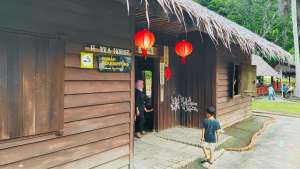
A glimpse into North Borneo’s rich agricultural past at the Sabah Museum’s traditional Hakka House
Petagas War Memorial: Honoring the Fallen Heroes
Just minutes from Tanjung Aru lies the solemn Petagas War Memorial. This sacred site honors the brave guerrillas of the Kinabalu Resistance movement led by Albert Kwok. In 1944, Japanese forces executed these local heroes following an uprising against occupation. A quiet monument stands amid peaceful green lawns, preserving their sacrifice for future generations.
World-Class Sunsets: Coastal Shores and Temperate Heights
Sabah proudly stands as one of the world’s premier sunset destinations. Beyond the famous shoreline of Tanjung Aru, cool mountain air offers a stunning alternative. Rising above the city, the temperate slopes of Kokol Hill provide sweeping panoramic views.
Home to the picturesque St. Joseph’s Church and the scenic Kokol Haven Resort, this cool sanctuary offers exciting mountain jungle trailing and thrilling paragliding flights right over the coast. Watching the sun dip below the ocean horizon from these high, misty peaks creates an unforgettable sight.
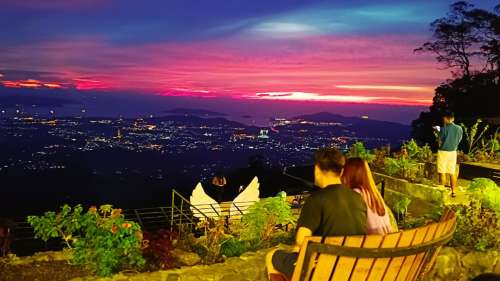
High above the clouds: stunning evening colors and sweeping city views from Kokol Hill
Southbound Stories: Kimanis Americans, Golf, and Island Mud
Heading further south leads to Kimanis, an area steeped in intriguing colonial lore. In the 1860s, American traders attempt to establish a short-lived colony named “Ellena” long before the British arrived.
Today, this peaceful region features a premier 18-hole golf course nestled near the coast. Just offshore sits Pulau Tiga, famous for its therapeutic natural mud volcanoes and clear diving waters.
Gateway to Great Heights and Northern Tips
Finally, Jesselton remains the ultimate starting point for grander Sabah expeditions. Traveling inland leads to the majestic granite peaks of Mount Kinabalu, a UNESCO World Heritage site rich in biodiversity and local legend.
Alternatively, driving north brings travelers to the dramatic Tip of Borneo in Kudat, where the South China Sea meets the Sulu Sea at the northernmost edge of the island. Jesselton connects every strand of North Borneo’s wilderness, heritage, and enduring spirit.
Seamless Booking Tools for Your Jesselton Adventure
Planning an unforgettable North Borneo itinerary is seamless with trusted modern booking platforms. Travel platforms like Klook and KKday offer effortless reservations for island-hopping boat transfers, Snuba diving sessions, and Kokol Hill paragliding tours.
For hassle-free transportation, Kiwi provides convenient flight routes into Kota Kinabalu, while self-guided audio tours on WeGoTrip bring colonial walking trails and heritage landmarks like the Atkinson Clock Tower to life at your own pace. Using these smart digital tools ensures maximum convenience, letting you spend less time planning and more time immersed in Sabah’s rich history and natural beauty.
Uncover the True Soul of Borneo!
In my book, The Eurasians, Jesselton is more than a setting. It is the gateway to the entire narrative. The story begins in 1964 during the Indonesian-Malaysian Confrontation. It follows the life of Aaron Johnson, an RAF pilot. He chose to stay in North Borneo and marry a local girl.
The story spans decades, ending with the 1997 Asian Financial Crisis. A romantic tension fuels the plot when a young lawyer, William Stewart, falls in love with Aaron’s daughter. Their lives mirror the shifts of the city itself—resilient, complex, and deeply rooted in the soil of North Borneo.
To truly understand Borneo’s complex history, politics, and fragile environment, The Eurasians sums it all up in one gripping story. Author Don Peter weaves a multi-generational family saga across Malaysia’s most turbulent decades. The novel delivers shifting perspectives, high-stakes deception, and relentless action scenes. It captures the resilient spirit and raw realities of this enchanted island. Grab your copy of The Eurasians today and dive into the ultimate historical thriller!

Click the image above to order
The Journey Continues
The silent stones of the ancient world continue to speak across the millennia. They urge us to study their structural triumphs and failures before our own modern empires face a similar decline.
Want to stay connected with the research, stories, and ongoing debate?
 Join the Discussion on Substack
Since this pillar post doesn’t feature a comment box, Substack is the best place to share your thoughts, ask questions, and join the conversation directly with me.
 Follow the Creative Process on Medium
Read my regular historical insights, character sketches, and reflections on the creative writing journey.