
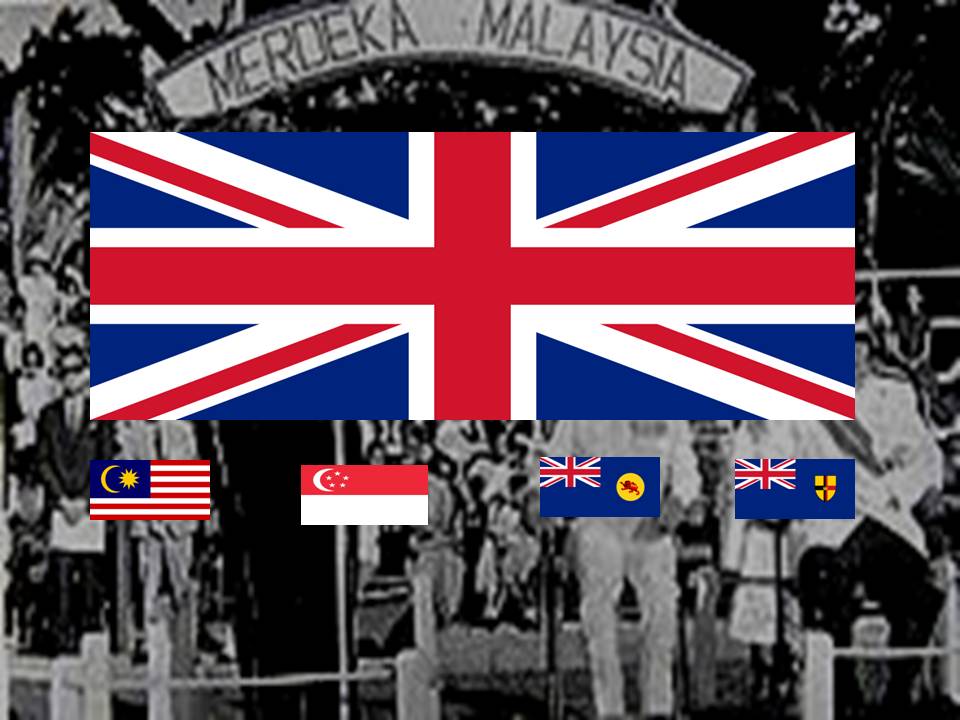
Explore the legal truth of the Malaysia Agreement 1963 (MA63). Discover how the British trusteeship doctrine, Queen Elizabeth II’s forgotten pledge to Borneo, and the late Zainnal Ajamain’s bold revelations inspired the historical romance-thriller The Eurasians. Uncover decades of political friction, broken covenants, and enduring resilience today.
Author Don Peter bridges pristine wilderness travel with rich historical storytelling across Sabah’s coastal reefs and ancient jungle trails. Uncovering forgotten colonial settlements and wartime memorials transforms a simple tropical getaway into a profound cultural discovery. Discover how these real-world Bornean adventures directly spark the pages of The Eurasians. Read the full journey From Borneo Travel Writer to Historical Fiction Author on the main master hub.
Unearthing the Ancient Scrolls of Modern Statehood
When archaeologists discover ancient biblical scrolls hidden inside desert caves, scholars do not merely glance at the parchment. Instead, they perform rigorous textual exegesis and palaeographical analysis. They decipher every stroke of ink to recover the author’s original intent.
For decades, the Malaysia Agreement 1963 (MA63) sat quietly in national archives like an unexamined codex. Most citizens accepted the conventional political narrative without question. However, foundational legal treaties operate exactly like constitutional scriptures. When researchers finally subjected the original 1963 accords to a thorough forensic audit, startling discrepancies surfaced. The modern federation had drifted remarkably far from its initial design.
Consequently, uncovering these unfulfilled clauses sparked a massive intellectual awakening across Borneo. What many perceived as settled administrative history turned out to be an active, unfulfilled international covenant registered under the United Nations Treaty Series No. 10760.
The British Blueprint: The Trustee and the Beneficiary
To comprehend the legal friction between East and West Malaysia, we must first examine British imperial jurisprudence. Great Britain frequently governed territories through the legal doctrine of Trustee and Beneficiary. Under this established framework, a dominant power serves as an administrative fiduciary for a developing region. The trustee manages public affairs until the beneficiary matures into full self-determination.
Historical records demonstrate this pattern clearly across the British Empire. The original thirteen American colonies functioned as beneficiaries under the British Crown. Following the revolution of 1776, they did not simply eliminate governance. Instead, they transferred their federal allegiance to a new constitutional trustee in Washington. Similarly, the United Kingdom still retains elements of this dynamic. England, Scotland, Wales, and Northern Ireland maintain separate legal identities and national sporting teams, yet they choose Westminster as their collective trustee.
In 1963, the plan for Malaysia followed this exact blueprint. North Borneo (Sabah) and Sarawak entered the new federation as distinct equal partners. Malaya assumed the role of managing partner and successor trustee, while the Crown withdrew direct rule. Nevertheless, severe constitutional friction inevitably arises whenever a trustee begins treating trust property as private ownership.
The American Precedent: When a Trustee Fails Its Compact
Following the American War of Independence, this fiduciary doctrine sparked the devastating Civil War decades later. The newly formed federal government assumed the role of successor trustee from the British, while individual states remained the beneficiaries.
In that era, citizens viewed their home states as sovereign mini-nations united under a voluntary compact. Consequently, local loyalty surpassed national allegiance. The states agreed to remain in the Union only while Washington honored its foundational obligations.
When South Carolina declared that the federal government had breached this constitutional trust in December 1860, leaders exercised what they viewed as their inherent right to secede. Ten additional states swiftly followed, demonstrating the catastrophic friction that erupts whenever a central trustee violates its covenant with its beneficiaries.
The Baram Petition: Her Majesty’s Royal Pledge
The safeguards embedded within MA63 did not emerge from elite boardrooms in London or Kuala Lumpur alone. On the contrary, they arose directly from grassroots indigenous resistance across the Borneo interior. During the late 1950s, colonial authorities announced preliminary merger discussions. Immediately, indigenous Orang Ulu leaders within the remote Baram district of Sarawak voiced grave concerns. They feared losing their customary land rights and political heritage under a rapid political transition.
District Officer Ian Urquhart received their urgent petition and forwarded it directly to Buckingham Palace. In response, Her Majesty Queen Elizabeth II issued a binding reassurance around 1960. The Queen affirmed that the British Crown remained dedicated to the 1941 Constitution of Sarawak and the Nine Cardinal Principles established by the White Rajahs.
Therefore, the British government incorporated ironclad protective clauses into the Inter-Governmental Committee (IGC) Report. These provisions protected native customs, religious freedom, immigration control, and financial entitlements. The Crown established an enduring legal obligation to safeguard these native rights permanently before any merger took place.
Zainnal Ajamain: The Whistleblower of Constitutional Defaults
If these foundational agreements were ancient scrolls, the late Zainnal Ajamain was the scholar who dusted them off and decoded their fine print. He stood as the foremost trailblazer and intellectual catalyst of the modern MA63 renaissance. Through rigorous archival investigation, Zainnal combed through declassified files in London and regional records. He produced groundbreaking works, most notably his seminal volume The Queen’s Obligation.
Zainnal demonstrated that subsequent domestic statutes had systematically diluted Borneo’s constitutional safeguards. Specifically, the 1974 Petroleum Development Act and the 1976 constitutional amendments downgraded the Borneo states from equal founding partners into ordinary constituent states.
Furthermore, he highlighted the mandatory forty percent net revenue entitlement owed back to Sabah under the Federal Constitution. Through countless public forums, Zainnal converted complicated legal jargon into widespread public literacy. He shifted the regional discourse from humble political pleading into a lawful demand for treaty compliance.
A Secret Mission to London: “You Can’t Be Serious!”
Beyond his published literature, Zainnal pursued bold strategies behind closed doors. During a personal conversation with him years ago, he shared a remarkable account regarding one of his overseas missions to the United Kingdom. I asked him about the true purpose behind his journey to London. Without hesitation, he revealed a startling objective.
He told me he had traveled to London to seek a direct audience with Her Majesty Queen Elizabeth II, arranged through Church of England channels. His objective was to present The Queen’s Obligation directly to the Crown. He intended to argue that because the federal trustee had defaulted on the core covenants of MA63, the British Crown had a duty to intervene and reassign the Trusteeship over Sabah to another Commonwealth nation—specifically New Zealand.
When I asked Zainnal why he chose New Zealand, his eyes lit up with fierce legal conviction. He pointed directly to the historic Treaty of Waitangi, where the British Crown established genuine partnership with the indigenous Māori.
Furthermore, he highlighted how Wellington successfully stewarded Pacific Island territories through proper United Nations trusteeships toward true autonomy. In his eyes, New Zealand understood fiduciary honor and indigenous rights far better than any other Commonwealth partner.
Stunned by the audacity of his plan, I looked at him and said, “You can’t be serious???”
Zainnal snapped back with intense irritation: “Yes! I am serious!”
Ultimately, diplomatic realities intervened. According to Zainnal, British political authorities exerted sudden pressure to cancel the audience at the eleventh hour, seeking to avoid an international dispute with Kuala Lumpur.
Regardless of whether one views his strategy as visionary or eccentric, that private exchange demonstrated his fierce dedication. Zainnal genuinely viewed MA63 not as symbolic rhetoric, but as a binding covenant backed by international law.
The Singapore Anomaly and the Lingering Question
Zainnal also shed light on Singapore’s legal paradox. Political events surrounding Singapore’s departure in 1965 highlight the complex nature of this imperial trusteeship. When Singapore separated from the federation, Prime Minister Lee Kuan Yew did not rely solely on regional declarations. Instead, the British Parliament enacted the formal Singapore Independence Act in 1966.
This historical action raises a profound constitutional paradox. If the 1963 merger had already granted complete independence, observers must ask why London needed to pass primary legislation to validate Singapore’s departure two years later.
Furthermore, this sequence of events left North Borneo and Sarawak in an ambiguous legal position. If the British Crown retained ultimate legislative sovereignty to dissolve ties with Singapore, questions remain regarding whether the Crown still holds residual obligations toward the Borneo states.
If the original terms of the partnership undergo unilateral alterations, one must ask whether the fundamental trusteeship remains legally intact. These unresolved dilemmas prove that the structural foundations of 1963 continue to influence contemporary governance.

A memorable conversation with the late Zainnal Ajamain (1954–2021) over coffee in Kota Kinabalu—a tireless pioneer whose groundbreaking research forever transformed the MA63 narrative.
A Tribute to Zainnal Ajamain: The Fearless Pioneer of MA63
“Zainnal Ajamain was the visionary scribe who dared to dust off our foundational treaties and demand that the original covenants of 1963 be honored. He gave Sabah and Sarawak a voice when silence was the norm, transforming legal fine print into a powerful movement for self-respect and justice. We honor his enduring spirit, his brilliant scholarship, and the indelible mark he left on the story of our nation.”
Don Peter
The late Zainnal Ajamain was born on April 18, 1954, and passed away on October 10, 2021 (at the age of 66).
He passed away in Kota Kinabalu, Sabah, leaving behind a lasting legacy as one of the most prominent activists, researchers, and voices on Sabah and Sarawak’s rights under the Malaysia Agreement 1963.
The late Zainnal Ajamain documented these legal findings in his landmark self-published work, The Queen’s Obligation (2015)—a collector’s item today that was distributed directly during his grassroots lecture tours across Borneo.
Weaving Legal History into Romantic Suspense: The Eurasians
During one of our quiet coffee sessions, I pitched a different tactic to Zainnal. “I prefer to keep the MA63 struggle small so we can manage it easily,” I suggested.He paused and puffed his cigarette smoke into the air. “What do you have in mind?” he asked.
I explained my strategy. Instead of tackling massive federal disputes right away, we should launch a focused grassroots campaign to restore the historic names: Jesselton for Kota Kinabalu and North Borneo for Sabah. I urged him to ignite a movement for our identity first, just as he had done for MA63.
Zainnal pondered the idea for a brief moment. Then he shook his head firmly. “No! The grand architecture must always take precedence over cosmetic disputes.” We both fell silent, sipping our coffee as the gravity of his words settled in.
While Zainnal pursued the macro-legal battle, I channeled that deep yearning for historical identity into creative storytelling. That defining conversation inspired a deliberate creative choice in my historical romance-thriller, The Eurasians. Throughout the entire manuscript, I replaced modern designations with their original colonial titles, proudly preserving Jesselton and North Borneo on every page.
Constitutional disputes involve far more than dry courtroom arguments and parliamentary transcripts. They directly shape the personal fortunes, daily struggles, and heartbreaks of everyday human beings. This profound friction forms the emotional backbone of the narrative.
The plot ignites in 1964, just months after leaders ratified MA63.
Borneo stood engulfed in the violent flames of the Indonesian Confrontation (Konfrontasi). Hostile forces actively opposed the newly formed federation, plunging dense jungle outposts into perilous warfare. Against this turbulent backdrop, the story reveals how sweeping geopolitical decisions disrupted ordinary lives across our homeland.
Uncover the True Soul of Borneo!
In my book, The Eurasians, Jesselton is more than a setting. It is the gateway to the entire narrative. The story begins in 1964 during the Indonesian-Malaysian Confrontation. It follows the life of Aaron Johnson, an RAF pilot. He chose to stay in North Borneo and marry a local girl.
The story spans decades, ending with the 1997 Asian Financial Crisis. A romantic tension fuels the plot when a young lawyer, William Stewart, falls in love with Aaron’s daughter. Their lives mirror the shifts of the city itself—resilient, complex, and deeply rooted in the soil of North Borneo.
To truly understand Borneo’s complex history, politics, and fragile environment, The Eurasians sums it all up in one gripping story. Author Don Peter weaves a multi-generational family saga across Malaysia’s most turbulent decades. The novel delivers shifting perspectives, high-stakes deception, and relentless action scenes. It captures the resilient spirit and raw realities of this enchanted island. Grab your copy of The Eurasians today and dive into the ultimate historical thriller!

Click the image above to order
The Journey Continues
The silent stones of the ancient world continue to speak across the millennia. They urge us to study their structural triumphs and failures before our own modern empires face a similar decline.
Want to stay connected with the research, stories, and ongoing debate?
 Join the Discussion on Substack
Since this pillar post doesn’t feature a comment box, Substack is the best place to share your thoughts, ask questions, and join the conversation directly with me.
 Follow the Creative Process on Medium
Read my regular historical insights, character sketches, and reflections on the creative writing journey.