
Did Noah exist? Explore the historical reality of the Great Flood by aligning scripture with Neolithic archaeology, the Last Glacial Maximum, and paleoflood science. Discover why the 2400 BC biblical timeline fails and how Noah bridges the gap between primitive hunters and early civilization.
The Quest for the Historical Patriarch
Many people wonder whether Noah was a genuine historical figure or a symbolic myth. While we lack direct physical evidence like a preserved timber vessel, the narrative of a Great Deluge echoes across almost every ancient global tradition.
The quest to find the historical Noah often encounters a major obstacle regarding chronology. Traditional religious calendars place the Great Flood in a relatively recent historical window. However, extensive geological and archaeological records reveal a much deeper story.
To discover the truth, we must look beyond bronze-age civilizations. We must peer through the mist of the late Stone Age to find the origin of the flood memory.
The Chronological Conflict: Why 2400 BC Fails
Biblical scholars often use the Anno Mundi timeline to calculate the patriarch’s lifespan. These records estimate that Noah was born roughly 1,000 years after Adam, placing the Great Flood around 2400 BC.
However, strict adherence to this 2400 BC timeline creates a massive historical contradiction. By 2400 BC, the Great Pyramids of Giza already dominated the Egyptian landscape. Simultaneously, thriving civilizations across Mesopotamia, the Indus Valley, and China maintained written records and complex cities.
If a universal cataclysm destroyed all global life in 2400 BC, these advanced societies would have vanished overnight. Yet, archaeological records prove unbroken cultural continuity across those regions. Furthermore, these ancient societies possessed their own historical accounts of a Great Flood that occurred long before their time.
Consequently, Noah could not have lived in 2400 BC. He must have existed much earlier, serving as a vital bridge between primitive hunter-gatherers and early agricultural settlements.
The Pre-Adamic Context and the Human Migration
Compelling genetic and archaeological evidence suggests that Adam arrived roughly 60,000 years ago. During this epoch, archaic hominid cousins like Neanderthals and Denisovans still roamed the planet.
Eventually, those archaic species went extinct through environmental pressure and genetic integration with Homo sapiens. Generations of Adamic humans expanded across the fertile corridors of the Near East. Over thousands of years, these populations gradually transitioned from wandering hunters into the world’s first settled farmers.
These pioneering communities sparked the Neolithic Revolution. Within these expanding agricultural tribes, Noah emerged as a prominent leader and spiritual guide.
Universal Memories: The Epic of Gilgamesh and Ancient Myths
The story of a devastating deluge is far from unique to the Bible or the Quran. It represents a shared memory woven into human history.
One famous parallel appears in the Epic of Gilgamesh, written down around 1800 BC. In this Mesopotamian epic, the gods resolve to cleanse humanity, but the god Enki warns the hero Utnapishtim to construct a massive vessel.
We observe this same narrative pattern across diverse ancient cultures:
-
In Greek mythology, Deucalion survives a massive flood sent by Zeus.
-
In Hindu tradition, Lord Vishnu warns King Manu of a world-ending ocean surge.
-
In Zoroastrian texts, Ahura Mazda warns Yima of melting snows and rising waters.
These widespread legends provide strong circumstantial evidence that a catastrophic event occurred in deep history. Because these stories were already ancient by 5000 BC, the real historical event—and the man we call Noah—must have occurred during the early Neolithic Period.
Paleofloods and the Last Glacial Maximum
The Neolithic Period began approximately 12,000 years ago, marking the end of the Last Glacial Maximum. As massive continental ice sheets melted across the Northern Hemisphere, global sea levels rose rapidly, dramatically reshaping coastlines.
Geologists agree that a global flood covering every mountain peak is physically impossible, as Earth lacks sufficient water volume. However, paleofloods—massive, localized sea surges—frequently devastated coastal regions during this post-glacial transition.
A primary candidate for Noah’s flood is the Black Sea Deluge hypothesis. As glacial meltwater filled the Mediterranean Sea, the rising ocean breached the Bosporus Strait, flooding the Black Sea basin with incredible speed and force. To a Neolithic tribe farming in that low-lying valley, their entire known world submerged beneath the waves.
The Logistics of the Neolithic Ark
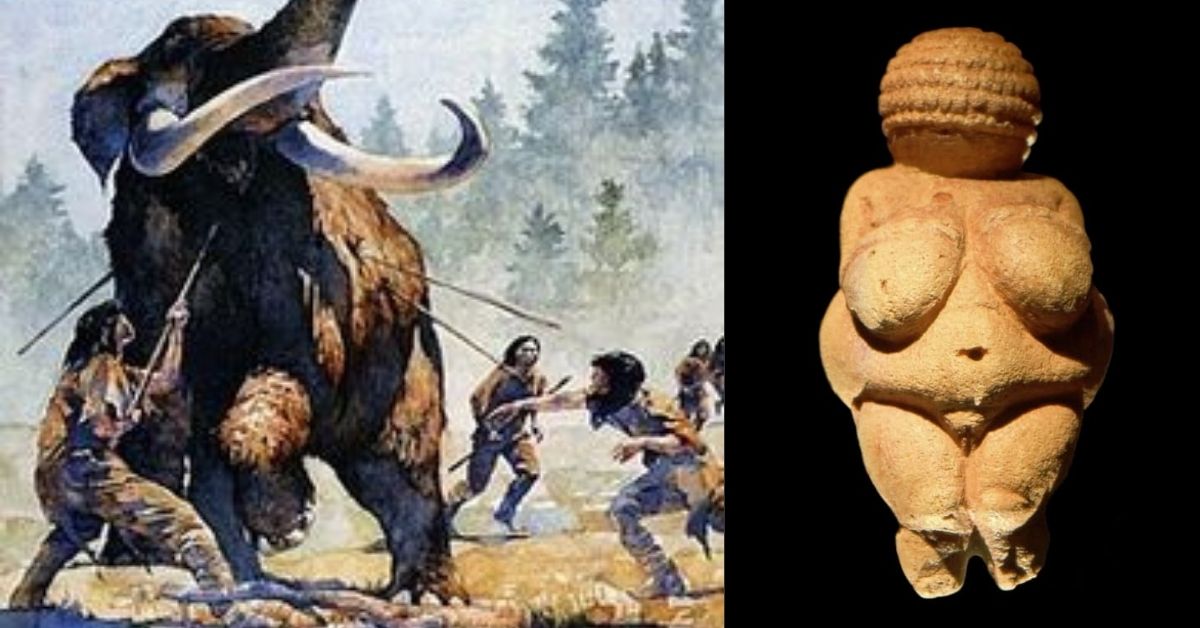
When we view Noah within his true Neolithic context, the logistical challenges of the Ark become completely rational. A Stone Age patriarch did not need to collect millions of global animal species.
Instead, Noah needed to protect the domestic livestock essential for the survival of his agricultural tribe. During the Neolithic Revolution, humans had just begun taming wild sheep, goats, cattle, and grain crops.
Preserving breeding pairs of these domestic animals meant the difference between community survival and absolute extinction. The Ark served as a floating sanctuary designed to preserve the fragile foundations of early human agriculture.
The Symbolic Drift and the Return to Idolatry
This historical era also experienced a profound shift in religious artistic expression. Archaeologists have uncovered thousands of clay figurines from Neolithic sites, illustrating a drift toward idol worship and localized cults.
As generations multiplied, humanity began abandoning the pure monotheism of Adam in favor of physical imagery. This decline matches the sacred narrative of Noah’s mission.
Noah was not merely a shipbuilder; he was a dedicated prophet sent to warn a society that had traded its spiritual foundation for carved clay figures.
Beyond the Physical Tools of Archaeology
Explorers frequently search for fossilized timber on the high peaks of Mount Ararat. However, expecting wooden structures to survive ten thousand years of natural decay remains unrealistic.
Noah lived prior to the invention of formal writing systems, meaning his legacy survived for millennia through oral tradition. By the time Sumerian scribes pressed the first cuneiform characters into clay tablets, Noah’s real historical life had already become a legendary account.
We do not prove Noah’s existence through a preserved wooden ship. We prove his existence through geological evidence of post-glacial flooding and the universal memory of the human race.
From Adam to Noah: The Viceroys’ Mission
Modern genetic research confirms that every living human descends from a single Scientific Adam. Yet an intriguing historical mystery remains open for debate.
Did a fully modern Adam appear suddenly with our exact physical form, or did a divine awakening transform an existing hominid into a conscious, knowledge-seeking human?
Either scenario marks the precise historical moment where primal biology met divine purpose, setting the stage for prophets like Noah to guide human consciousness. From Adam to Noah, these divinely appointed Viceroys shared a singular mission: to maintain cosmic and societal harmony (Salam) on Earth by guiding humanity to serve the One God exclusively and resist the drift into moral chaos.
Click to get a copy
Conclusion: A Bridge Between Worlds
Noah served as a vital bridge in human history, standing between the era of the hunter-gatherer and the birth of permanent agricultural civilizations. He witnessed the end of the Ice Age and the violent rising of the seas.
In my historical research and creative writing, I view Noah as a true Viceroy of God—a messenger entrusted with preserving humanity during a dramatic climate transformation.
This intersection of faith, paleoclimatology, and deep history forms the beating heart of my novel, God’s Viceroys (also published in hardcover as The Viceroys of God). Through the lens of an intense historical thriller, the story explores the clash between primitive tribes, ancient climate catastrophes, and the divine mandate of the prophets.
You can experience this epic journey and explore the secrets of our ancient past by following the link below to my latest work.
Discover Another High-Stakes Historical Mystery
If you enjoy thought-provoking stories that challenge conventional history, explore my next historical thriller, DOGMA: Untold History of Early Christianity & Islam. This gripping novel follows two brilliant scientists who travel back through time to uncover the raw, unvarnished truth behind their deepest beliefs. Available now in eBook format, DOGMA delivers an unforgettable journey through time, faith, and ancient secrets.
My latest book, DOGMA, directly complements this research into human origins. It reveals how Christianity, Islam, and global faiths originally sprang from a single unified belief in One God and the Last Day.
By tracing these ancient monotheistic roots, DOGMA unlocks the shared spiritual heritage that unites humanity across centuries of empire and cultural change. Readers discover how a single divine spark ignited the great religious movements of history.
The Journey Continues
The silent stones of the ancient world continue to speak across the millennia. They urge us to study their structural triumphs and failures before our own modern empires face a similar decline.
Want to stay connected with the research, stories, and ongoing debate?
 Join the Discussion on Substack
Since this pillar post doesn’t feature a comment box, Substack is the best place to share your thoughts, ask questions, and join the conversation directly with me.
 Follow the Creative Process on Medium
Read my regular historical insights, character sketches, and reflections on the creative writing journey.