
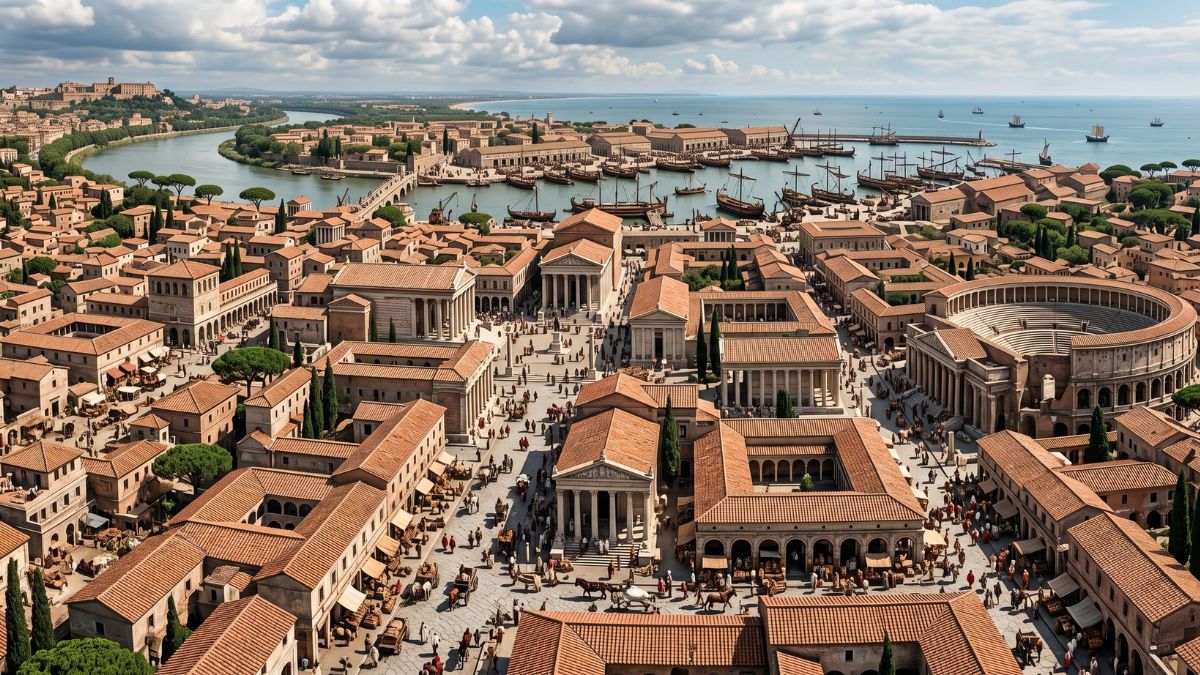
Escape the crowded city center and unlock the hidden history of Ostia Antica with this expert travel guide. Discover the ultimate day-trip itinerary through ancient merchant bakeries, shipping guild mosaics, and majestic open-air stone theaters. Maximize your Roman holiday with simple train routes to Rome’s forgotten maritime gateway.
Before you board the train to the ancient coast, discover how this bustling harbor city fit into a much grander, cyclical narrative in our primary pillar post, The Roman Empire: The Rise, Fall, and Eternal Renaissance. Uncover the hidden historical connections standard textbooks completely miss, from cinematic blockbusters to the profound spiritual prophecies that predicted the empire’s ultimate survival.
Stepping Off the Beaten Track: Escaping to Rome’s Coastal Gateway
Slipping away from the relentless traffic and dense tourist queues of central Rome reveals a magnificent, sprawling secret just thirty kilometers to the west. Ostia Antica functioned as the supreme commercial harbor city of the ancient empire, breathing life and circulating goods into the capital for generations.
Unlike Pompeii, which a violent volcanic eruption froze instantly, this massive trading hub slowly faded into abandonment over centuries as the Tiber River shifted its path. Today, it stands as a beautifully preserved, atmospheric ghost town where you can experience history in complete, undisturbed serenity.
Planning a seamless morning day trip to this coastal marvel is incredibly simple and affordable. Travelers can board the regional commuter train at the Porta San Paolo station, located directly adjacent to the Piramide metro stop on Line B. A breezy thirty-minute train ride transports you straight to the Ostia Antica station for a minimal fee.
After crossing the pedestrian overpass, a short walk brings you right to the monumental gates, completely bypassing the massive gridlocks of the main metropolitan attractions.
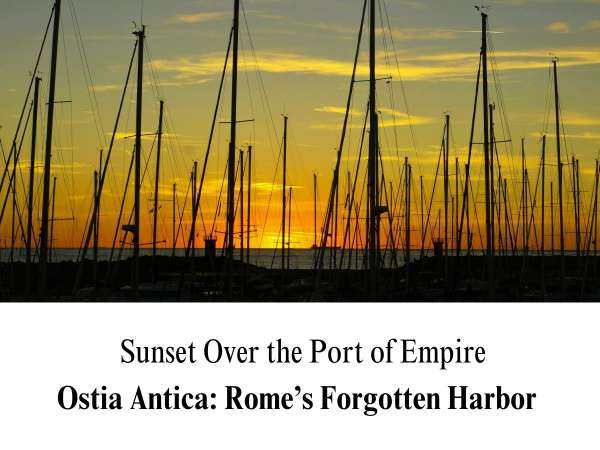
Walking the Main Artery: Discovering Bakeries and Taverns
Your exploration begins along the Decumanus Maximus, the grand, cobblestone arterial highway that cuts directly through the heart of the ancient city. As you wander down this historic road, the sheer preservation of everyday Roman life quickly comes into sharp focus. Rather than viewing isolated marble columns from behind a distant velvet rope, you can walk directly inside early apartment blocks, known as insulae, which still boast multiple brick floors.
Follow the deep cart tracks in the stones toward the fascinating Bakery of Silvano, where monumental lava-stone millstones still dot the floor. Just down the street, step into an authentic Roman tavern to admire a intact marble serving counter complete with ancient wall frescoes.
Exploring these commercial spaces reveals a striking sense of human connection. It reminds us that behind the grand myths of military conquests stood a bustling, diverse population of working class merchants, sailors, and bakers who kept the empire running.
The Heart of the Hub: Navigating Guild Mosaics and the Theater
From the market streets, shape your itinerary toward the breathtaking Square of the Corporations, the sprawling commercial nerve center of the ancient Mediterranean shipping industry. This vast public plaza features over sixty individual merchant offices flanking a central temple.
Walking along the covered arcades allows you to examine the stunning, intact monochrome floor mosaics. These ancient black-and-white tiles explicitly depict the specialized vocations of each shipping guild, showcasing images of grain vessels, heavy ropes, and exotic harbor beasts.
Directly adjacent to this corporate square sits the magnificent Theater of Ostia, a towering stone amphitheater that once held four thousand spectators. Climbing the steep, sweeping steps to the top row offers a spectacular panoramic view of the surrounding umbrella pines and expansive ruins.
The Romans engineered this multi-tiered theater for diverse public entertainment, hosting everything from local dramatic plays to intense gladiatorial spectacles. It remains so structurally sound that local musicians and actors still perform on its ancient stage during vibrant summer festivals.
The Pillars of the Port: Exploring Imperial Baths and Pagan Altars
Conclude your historical loop by navigating deeper into the monumental civic center to marvel at the massive, brick Capitolium temple built during the reign of Emperor Hadrian. This soaring sanctuary stood as the ultimate symbol of imperial loyalty, dedicated to the supreme Roman deities. Standing at the base of its high podium reveals the raw, majestic scale of ancient civic architecture.
Before heading back toward the train station, make a final stop at the sprawling Baths of Neptune to view the masterwork mosaics depicting the sea god driving a chariot of seahorses. Nearby, seek out the hidden, subterranean pagan shrines known as Mithraea, where ancient soldiers gathered in secret to worship mystical eastern deities.
This rich tapestry of cosmopolitan history forms the perfect half-day itinerary, offering a profound, uncrowded window into the daily realities of the Roman world.
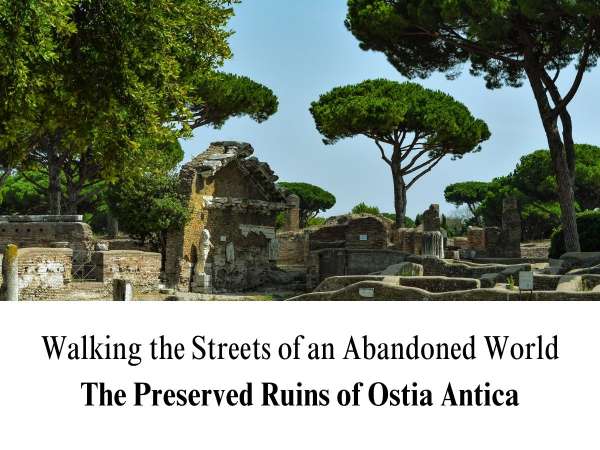
Beyond the Core: Plan Your Roman Exploration
To seamlessly expand your itinerary beyond these central monuments, you should map out the spectacular destinations that form the perfect framework for a comprehensive regional tour. Discover the sweeping engineering marvels that once powered the capital by reviewing our feature on The Great Aqueducts of the Appian Way.
If you want a peaceful escape into lush gardens and ancient estates, don’t miss our day trip itinerary covering The Historic Palaces and Terraces of Palatine Hill.
Finally, you can trace the monumental evolution of imperial design and engineering by diving into our standalone architecture guides for Navigating the Colosseum and The Secrets of the Pantheon.
Join the Journey Behind the Pages
The weathered stones of the ancient capital continue to speak across the millennia, actively urging us to study their immense triumphs and failures before our own modern structures face a similar decline. If you want to explore the deep, unvarnished historical research that breathes life into these narrative worlds, let’s stay connected across the web.
You can enjoy shorter, lighter essays, creative writing tips, and quick reflections on my regular updates by following me on MEDIUM.
Because this specific blog layout does not feature a public comment box, the absolute best way to share your personal thoughts, ask burning historical questions, or receive exclusive book updates directly to your inbox is to subscribe to my SUBSTACK.