
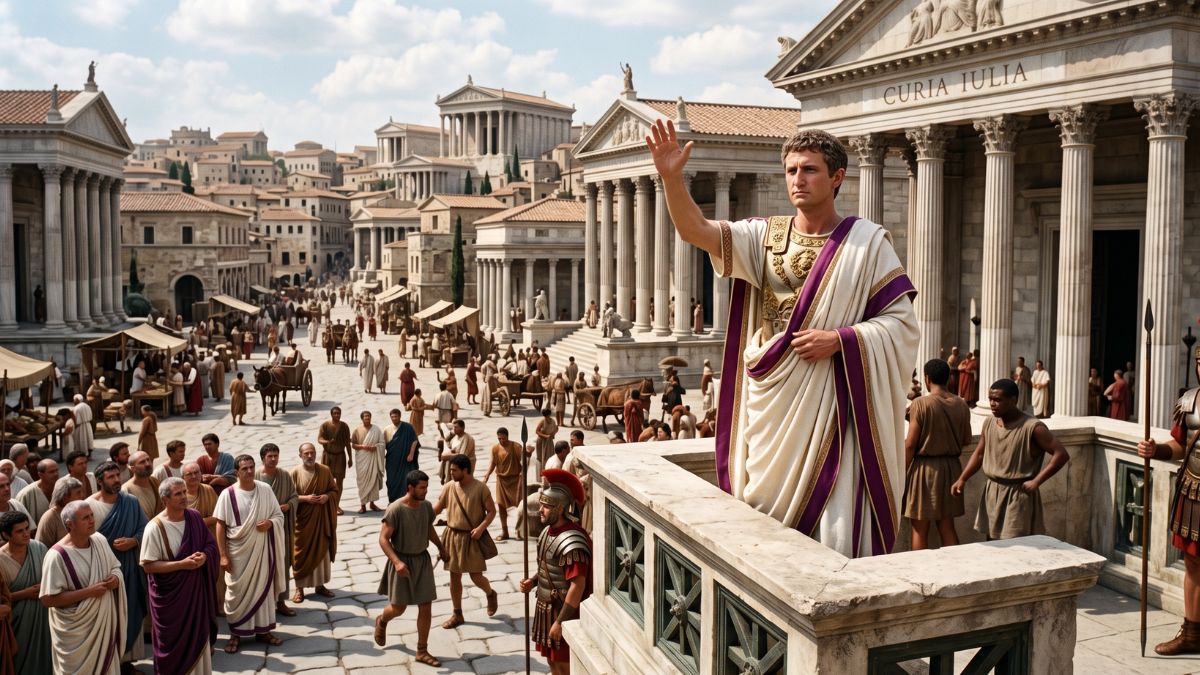
Discover the spectacular rise, fall, and eternal resurrection of the Roman Empire. From Hollywood epics and ancient prophecies to hidden Islamic connections, this concept-driven history exposes unique angles textbooks miss. Explore Rome’s enduring legacy and plan your imperial journey.
Rome serves as the magnificent heart of the ancient empire, but another legendary city offers a completely different look into the past. While you explore the grand monuments of the capital, you should also journey south to see a world frozen in time. Head over to our comprehensive Pompeii blogpost to discover how Mount Vesuvius preserved an entire Roman city in ash.
The Cinematic Spark: Falling in Love with a Ruin
Hollywood has an undeniable obsession with antiquity. For many enthusiasts, a lifelong infatuation with ancient Rome did not begin in a dusty classroom. Instead, it ignited in the dark of a movie theater, in the 1960s and early 1970s.
But by the 1980s, epic historical films about Roman opulence and extravaganza were becoming a rare breed. The film industry faced a massive crisis. Audiences were declining rapidly due to the sudden emergence of home video formats. Yet, a few cinematic masterpieces survived to inspire a new generation of history lovers.
The mid-1960s masterpiece, The Fall of the Roman Empire, directed by Anthony Mann, offered an early window into this majestic world. Decades later, Ridley Scott’s Gladiator in 2000 took the world by storm. It introduced unforgettable performances, featuring Russell Crowe as the noble Maximus, Joaquin Phoenix as the tyrannical Commodus, and Oliver Reed as the grizzled gladiator trainer, Proximo.
Remarkably, both Hollywood blockbusters chronicle the exact same pivotal era in history. They detail the fraught succession of Emperor Marcus Aurelius and the subsequent tyranny of his son, Commodus.
To heighten the drama, both directors deliberately took massive historical liberties. They invented fictitious heroes to battle a cartoonishly evil Commodus. Yet, despite these factual inaccuracies, these films accomplished something profound. They transformed ancient history into a living, breathing spectacle. They inspired countless viewers to become archaeologists, professors, and lifelong guardians of the Roman legacy.
The Grand Paradox: Brutality Versus Brilliance
How do we reconcile our modern fascination with such a violent past? Before diving into the mechanics of their civilization, we must confront a dark reality.
The Romans were often merciless brutes. They aggressively conquered neighboring lands, heavily taxed their poorest subjects, and ruthlessly enslaved millions of people who lost against them in battle. They built an entire civilization on the backs of slaves and celebrated the blood of gladiators in public arenas.
Despite this profound cruelty, the mystique of Rome remains overwhelmingly potent. The grandeur of their civilization was simply too awe-inspiring to ignore. This cultural brilliance allured outsiders, prompting them to glorify the Roman lifestyle. Conquered peoples did not just submit to Rome; they actively desired to assimilate, participate, and become Roman themselves.
From Kings to Emperors: The Evolution of Power
Most people view ancient Rome as a monolithic empire that existed unchanged for a thousand years. However, a deeper dive reveals that Roman governance underwent radical transformations over the centuries.
Rome began its journey not as an empire, but as a minor kingdom ruled by early monarchs between 753 BC and 509 BC. It then evolved into a proud Republic, governed by a Senate and elected consuls for nearly five centuries.
The transition to a true empire occurred almost poetically, coinciding precisely with the dawn of the first century and the biblical birth of Christ. Augustus Caesar seized absolute control, dissolved the failing Republic, and declared the Pax Romana (the Roman Peace) in 27 BC.
This imperial era evolved through two distinct stages. First came the Principate, where early emperors acted under the guise of a “republican dictator,” pretending to respect the Senate while holding total authority. By the late third century, this illusion shattered into the Dominate. Emperors adopted the title of Dominus (Lord), ruling openly as absolute monarchs with divine rights granted directly by the gods.
When Did Rome Actually Fall? The Great Debate
When did the grand experiment finally collapse? For centuries, mainstream culture accepted a single, tidy narrative regarding the end of the empire.
In 1776, English historian Edward Gibbon published his monumental work, The History of the Decline and Fall of the Roman Empire. Gibbon famously argued that the long disintegration of Rome began the moment the erratic Commodus replaced his wise father, Marcus Aurelius.
Other historians point to a more specific, political end date in 476 AD. During this fateful year, a Germanic chieftain named Odoacer deposed the teenage western emperor, Romulus Augustulus. Barbarian tribes quickly seized control of Western Europe, carving up the old Roman estates into fractured kingdoms.
The Great Byzantine Lie: The Empire in the East
Limiting the fall of Rome to the year 476 AD ignores a massive geopolitical reality. How could historians make such a sweeping assumption when the Roman Empire had already shifted its core to the East?
Decades before the western collapse, Emperor Constantine moved the imperial capital to the magnificent, strategically located city of Constantinople.
Modern textbooks have the utter audacity to label this surviving eastern half as the “Byzantine Empire.” Yet, this is a completely modern historical invention designed to separate the pagan, Latin past from the Christian, Greek future.
The citizens living in Constantinople never used the word Byzantine. They spoke Greek, but they proudly called themselves Romaioi—Romans. Their laws, their administration, and their political identity represented an unbroken chain of Roman statehood that lasted until 1453 AD.
The Forgotten Reconquest: Rome Rises Again
The story of Rome does not end with a tragic western collapse. In fact, the Eastern Roman Empire eventually staged an unbelievable comeback that turned the tide of European history.
During the sixth century, the ambitious Eastern Emperor Justinian I launched a massive military campaign to reclaim the lost Western territories. Guided by his brilliant general, Belisarius, the Roman military successfully reconquered Italy, North Africa, and parts of Spain.
For a golden era, Rome was reunited with its empire. The Mediterranean Sea once again became a Roman lake. Unfortunately, standard history books routinely omit this spectacular resurrection unless you dive incredibly deep into the historical archives. Rome did not just fall; it fought, adapted, moved east, and rose again.
The Prophecy of Ar-Rum
Defeat then Victory
The unbelievable resilience of Rome is not merely a secular phenomenon. It mirrors a profound spiritual reality documented in the thirtieth chapter of the Quran, Surah Ar-Rum. The scripture notes a devastating Roman defeat against the Sassanid Persians but boldly predicts a complete reversal within a few years.
Historically, Emperor Heraclius accomplished this exact miracle, shattering the Persian Empire just as the early Muslim community celebrated their own victory at Badr.
Because sacred texts carry a timeless, perpetual resonance, this prophecy highlights an ongoing historical cycle. Rome consistently faces existential ruin only to rise from the ashes. We observe this pattern when Constantine the Great rescued the fractured empire from the Crisis of the Third Century, and again when Justinian I reconquered the West. Charlemagne later revived the imperial ideal, setting the direct stage for the Renaissance and the Age of Enlightenment.
Believers Rejoice
Ultimately, true believers in human progress—regardless of race or religion—consistently rejoice whenever these foundational Roman ideals spark global renewal. The core Roman emphasis on structured law and civic responsibility directly birthed our modern achievements.
Humanity triumphed as this enduring spirit fueled the printing press, the fight for freedom of expression, and the scientific revolutions that conquered global scarcity. Rome never truly died; it simply evolved to power our modern world.
The Mysterious Dawn of Rome
The Etruscan Enigma: Hollywood Before Hollywood
Long before the glitz of the Caesars, a magnificent and mysterious civilization dominated northern and central Italy. Thriving in the fertile regions of modern-day Tuscany, western Umbria, and northern Lazio, the Etruscans built a wealthy, advanced society.
Modern audiences often imagine the ancient world through a cinematic lens. Ironically, the grand, sophisticated lifestyle we attribute to Hollywood Romans actually belonged to the Etruscans. They enjoyed lavish banquets, vibrant art, complex religious rituals, and advanced engineering.
Yet, a profound mystery shrouds these ancient people. The Etruscans left behind virtually no surviving historical literature or narrative documents. Our entire understanding of their civilization relies heavily on the writings of later Roman historians. Naturally, these later chroniclers visualized the Etruscans as being nearly identical to the imperial Romans of the first century.
The Refugee Footprint: From the Ashes of Troy
During this golden age of Etruria, the earliest Romans lived a starkly different existence. They occupied primitive mud-brick huts, huddled on the Palatine Hill in the deep shadow of their advanced northern neighbors.
Bordering these early Roman settlements were the Sabines, a neighboring Italic tribe. Further south, wealthy maritime colonies established by the Greeks and Phoenicians began dotting the Italian coastline.
Fascinating historical theories bridge the gap between these cultures. The famous lawyer-turned-historian Bruce Gore conjures the compelling imagination that Etruscan linguistic roots and cultural patterns echo the ancient city of Troy. This beautifully aligns with the timeless legend that survivors brought their civilization across the Mediterranean after losing their city to the Mycenaean Greeks.
In this historical vision, the noble remnants of fallen Troy escaped across the sea to build the bedrock of Etruscan society. Meanwhile, the early Romans acted almost like Neolithic hunter-gatherers, watching the glittering Etruscan cities with intense envy.
The Bloodline of the Wolf: Romulus and Remus
How did a backwater settlement break free from the shadows? Roman mythology answers this with a brutal, captivating origin story. Legend states that the twin brothers, Romulus and Remus, were abandoned as infants and miraculously adopted by a ferocious she-wolf.
The human boys inherited an aggressive, predatory nature from their wild foster mother. Determined to stamp their names onto the landscape, the competitive siblings eventually turned on each other. Their rivalry escalated into a bitter, fatal conflict.
Romulus killed his brother Remus in a fit of rage, establishing the young village entirely in his own name. This foundational fratricide permanently shaped the Roman psyche. The relentless, vicious, and bloodthirsty behavior of the Roman war machine directly reflected the spirit of its first king, Romulus.
Cincinnatus: The Supreme Ideal of the Citizen-Soldier
Despite their inherent violence, the Romans developed a profound capacity for civic virtue. No figure embodies this ideal better than Lucius Quinctius Cincinnatus, a favorite hero of the American Founding Fathers.
In the fifth century BC, Rome faced an existential military crisis. The Senate called upon Cincinnatus, a humble aristocrat working his own small farm, granting him absolute dictatorial power to save the city.
Cincinnatus raised an army, crushed the enemy, and saved Rome in a mere fifteen days. Rather than clinging to supreme authority, he immediately resigned his dictatorship and returned to his plow.
If Cincinnatus believed in a single, overarching cosmic order, he beautifully fulfilled the definition of a Mu’min—a true believer. His legendary humility and sense of duty perfectly showcase the core pillars of Deism and Stoicism. He viewed power not as a prize, but as a temporary burden to bear for the greater good.
The Tragedy of Lucretia: Toppling Tyrants for a Republic
The final catalyst that transformed Rome from a subjugated kingdom into a proud Republic stems from a tragic, inspiring story of virtue. This narrative centers on Lucretia, a noble and deeply moral Roman woman.
According to ancient accounts, the tyrannical son of the Etruscan king brutally assaulted the virtuous Lucretia. Refusing to live with what she perceived as dishonor, she courageously revealed the crime to her family before taking her own life.
This devastating sacrifice sparked immediate outrage among the Roman populace. Led by outraged noblemen, the citizens rose in open rebellion, successfully expelling the corrupt Etruscan monarchs from the city forever. Lucretia’s dedication to her moral dignity became the foundational myth of Roman liberty. Her tragic end served as the root cause that brought down the monarchy, instantly birthing the Roman Republic in 509 BC.
The Umayyad Caliphate
The Islamic Successors to Caesar
Mainstream historical narratives routinely overlook the profound cultural legacy of the Umayyad Caliphate. For centuries, traditional court historians treated these Damascus-based rulers as secular renegades, hypocrites, and illegitimate usurpers.
Critics frequently accused them of hijacking the spiritual message that Muhammad had originally preached and the Rashidun Caliphs had championed. Consequently, negative remarks dominate standard textbooks, leaving these rulers with virtually no historical acclaim.
This intense hostility stems from a fascinating cultural reality. The Umayyads harbored a deep infatuation with Roman administration and architecture. In fact, contemporary observers openly labeled the first Umayyad Caliph, Muawiyah I, as the “Caesar of the Arabs.” He consciously abandoned tribal simplicity, choosing instead to model his Syrian court directly after the Byzantine imperial system.
A striking macro-historical analogy perfectly illuminates this transformation. The early Rashidun Caliphs resembled the rustic, simple citizens of early Rome. These pious, unpretentious desert forces shocked the world by shattering two dominant superpowers: the Byzantine Empire and the Sassanid Persians. In this historical parallel, the early Muslims acted like the original Roman tribesmen toppling their advanced, sophisticated neighbors.
The Republic of Damascus: Holding the Frontier
Following this initial explosion of conquest, the Umayyads assumed control, acting precisely like the aggressively expanding Roman Republic. They established a centralized state apparatus, stabilized chaotic frontiers, and fiercely maintained their grip on vast, newly acquired territories.
Eventually, the revolutionary Abbasids brutally ousted the Umayyads, mirroring how the absolute Roman Empire replaced the old Republic, which ultimately initiated a long, bureaucratic decline.
Significantly, neither the early Rashidun nor the Umayyad rulers introduced entirely new, convoluted theological doctrines. Operating with a complete absence of rigid, dogmatic frameworks, they simply disseminated a pure, ancient message. They called humanity back to the foundational pillars of believing in the One God and performing righteous deeds.
Despite their obvious political shortcomings, the Umayyads made an unrivaled contribution to global civilization. Their profound appreciation for Greco-Roman culture prompted them to safeguard, translate, and propagate classical wisdom. They actively preserved the masterworks of Hellenistic philosophers, scientists, and mathematicians that Europe had completely abandoned.
The Spark of Global Enlightenment: From Syria to Europe
When the Umayyads finally succumbed to their political rivals, their foundational intellect had already changed human history forever. A surviving branch of their dynasty escaped to Spain, establishing the glittering Caliphate of Córdoba. This preservation of classical heritage directly fueled the Islamic Golden Age in both Baghdad and Andalusia.
Ultimately, this vast repository of rediscovered Roman and Greek knowledge found its way back into Western Europe. This monumental transfer of information ignited the flame of the European Renaissance. By embracing the aesthetics and intellect of the Caesars, these early Islamic rulers preserved the very light that dragged the Western world out of the dark ages.
From History to Fiction: The Lost Roman Viceroy
This rich blend of Roman history and human drama provides the exact conceptual foundation for a pivotal chapter in my novel, God’s Viceroys. The narrative draws on a core universal principle: the idea that every nation receives a spiritual messenger before its ultimate collapse.
To drive this point home, the story introduces Felix, an elite Roman equestrian soldier who embodies the ultimate conflict between brutal imperial conquest and high moral virtue.
Before his spiritual awakening, Felix served on the dangerous frontiers of Batavia, battling fierce Germanic tribes. As a strict Stoic and principled deist, he consistently refused to claim defeated captives as slaves. This honorable stance deeply angered his plunder-hungry subordinates.
Fearing an imminent mutiny, his commanding general forced Felix into early retirement and sent him back to his rustic villa. There, a transcendent entity appointed the retired soldier as a viceroy of God, tasking him with a dangerous mission to warn the corrupt local citizens to repent.
Filled with prophetic urgency, Felix marched directly into the crowded Roman forums, boldly warning the wealthy elite of an impending, fiery doom. Instead of listening, the proud citizens mocked him as a fanatic who threatened their luxury. The hostile crowd turned on Felix, brutally murdering the lonely warner in the public square.
By executing an honorable equestrian sent to save them, the city sealed its own fate. Shortly after his martyrdom, the earth fractured, the sky turned black, and the entire region was wiped from the face of the earth—a gripping narrative twist you can explore deeply within my historical fiction collection.
Beyond the Capital: Plan Your Imperial Journey
To completely grasp the massive scale of this eternal empire, you must venture into the remarkable landmarks surrounding and defining the capital. You can step directly onto the blood-soaked arena floor by reading our comprehensive guide to Navigating the Colosseum. Many modern explorers secure smooth entry to this ancient theater through reputable digital ticketing platforms like Klook or utilize immersive, self-guided audio itineraries from WeGoTrip.
If you want to walk the exact stone paths where Roman politicians clashed, don’t miss our detailed breakdown on The Secrets of the Roman Forum and Palatine Hill. In fact, these historic hillsides are exactly where I visualized the aristocratic background of Felix before his military deployment in my novel, God’s Viceroys.
Furthermore, you can experience the supreme pinnacle of ancient engineering by exploring our deep dive into The Architecture of the Pantheon. Finally, expand your horizon beyond the city center. Discover the incredibly preserved naval hub of antiquity through our travel feature on Ostia Antica: Rome’s Forgotten Harbor City, or marvel at the monumental water systems highlighted in our historical review of The Great Aqueducts of the Appian Way.
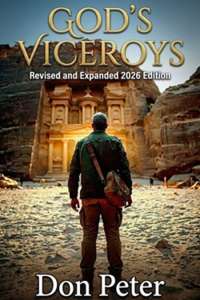
Digital release of God’s Viceroys
The Echoes of an Eternal Blueprint
Ultimately, Rome remains far more than a collection of weathered marble ruins and tourist destinations. It stands as a living, breathing monument to human ambition, civic structure, and cultural resilience. The towering arches constantly remind us how a small backwater village successfully engineered a global blueprint that still governs modern society. These monuments prove that while empires eventually fracture, powerful ideas completely transcend physical destruction.
Observers can easily view the collapse of the Western Empire as a simple military defeat against barbarian tribes. Alternatively, thinkers can perceive it as a natural cosmic correction for a society built on relentless expansion and systemic brutality. Regardless of your perspective, the core historical lesson remains entirely unaltered.
Material luxury and immense power frequently blind a civilization to its internal moral decay. Rome actively teaches us that when a society silences its inner virtues, the grandest institutions can dissolve into memory.
For shorter historical essays, character sketches, and lighter reflections on the creative writing journey, you can easily follow my regular updates on MEDIUM.
The stones of the ancient capital continue to speak across the millennia, urging us to study their triumphs and failures before our own structures face decline. Because this blog post does not feature a comment box, the absolute best way to share your thoughts, ask questions, or connect with me directly is through my SUBSTACK.