
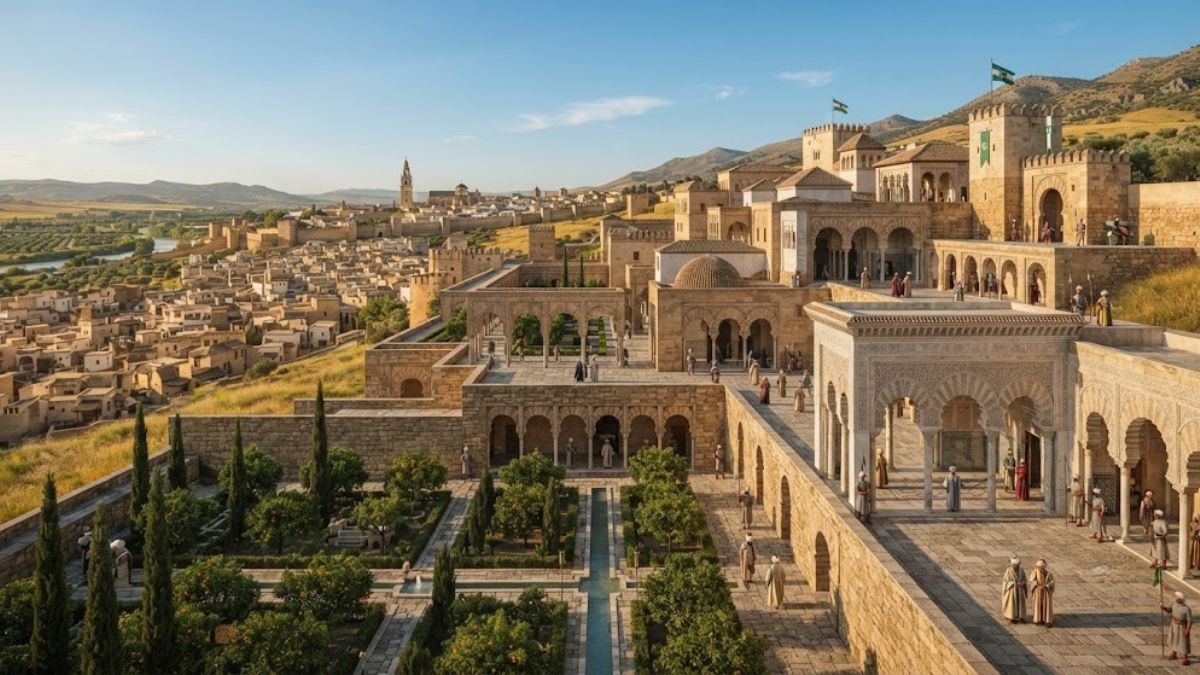
Uncover Spain’s lost Caliphate city! Built in the 10th century to showcase unmatched imperial luxury, Medina Azahara was a shining palace complex destroyed by civil war after just seventy years. Step inside restored marble reception halls and explore grand archaeological ruins with our ultimate visitor guide to Córdoba’s royal citadel.
The grand monuments of Al-Andalus shaped medieval Spain. Each historic city holds a piece of this fascinating era. Discover how Rome’s collapse paved the way for Moorish rule. Read the full story in From the Ashes of Rome: Spain’s Al-Andalus History.
Exploring Spain’s historic fortresses, lost cities, and ancient landscapes reveals a fascinating legacy. From iconic monuments like Córdoba’s grand Mezquita and Granada’s Albaicín lookouts to Málaga’s Alcazaba fortress, each destination tells a story. Plan your next adventure with our historical guides to Seville’s Royal Alcázar, Ronda’s dramatic bridges, Catalonia’s coastal Tamarit Castle, day trips to Gibraltar, and Island routes through Gran Canaria and Tenerife’s Pyramids of Güímar.
Exploring the Palace Ruins, History, and Traveler Tips of Córdoba’s Royal Citadel
Madinat al-Zahra stands as one of the most enigmatic royal cities in Western history. Located just west of Córdoba at the foot of the Sierra Morena, this vast 10th-century palace complex once showcased the absolute pinnacle of Moorish luxury, power, and artistic genius. Built by the first Umayyad Caliph of Córdoba, the shining city was designed to awe foreign envoys and project unmatched imperial authority. However, civil war reduced the site to ruins after barely seventy years. If you want to uncover the haunting grandeur of Al-Andalus, exploring this grand archaeological site is essential. Let’s dive into the romantic history behind this lost capital and map out your ultimate visitor guide.
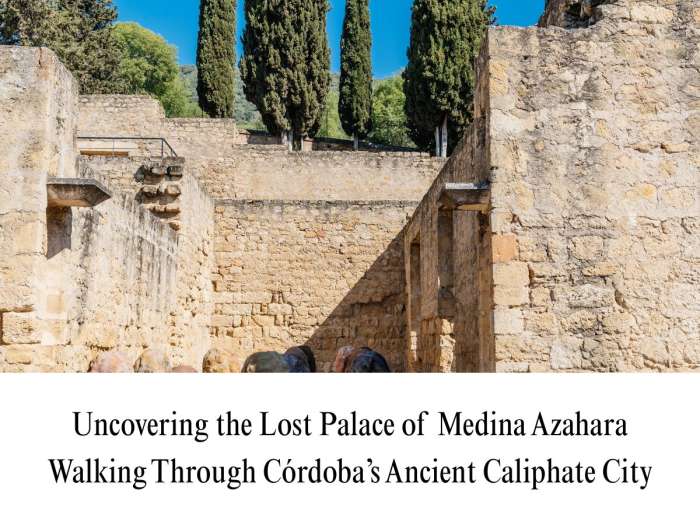
The Caliph’s Dream: A Brief History of Madinat al-Zahra
In the year 936 AD, Caliph Abd al-Rahman III ordered the construction of a magnificent new administrative capital outside Córdoba. Romantic legends claim he built the glistening palace complex to honor his favorite concubine, Zahra. However, political strategy drove the project. Having newly declared himself Caliph, Abd al-Rahman III needed a monumental complex that rivaled the grand courts of Baghdad and Cairo.
Thousands of craftsmen, stonemasons, and laborers transformed the terraced hillsides over several decades. They carved intricate marble arches, installed shimmering reception halls, and laid vast ornamental gardens fed by mountain aqueducts. The imperial city functioned as a self-contained world of luxury and statecraft. Tragically, its golden age ended abruptly. Brutal Berber invasions and civil warfare erupted in 1010 AD, leading to the total destruction and looting of the palace grounds. For centuries, the ruins lay buried under soil and legend, earning the title of Spain’s lost city.
Unmissable Sights: What to See at Medina Azahara
The Reconstructed Majesty: The Salon Rico
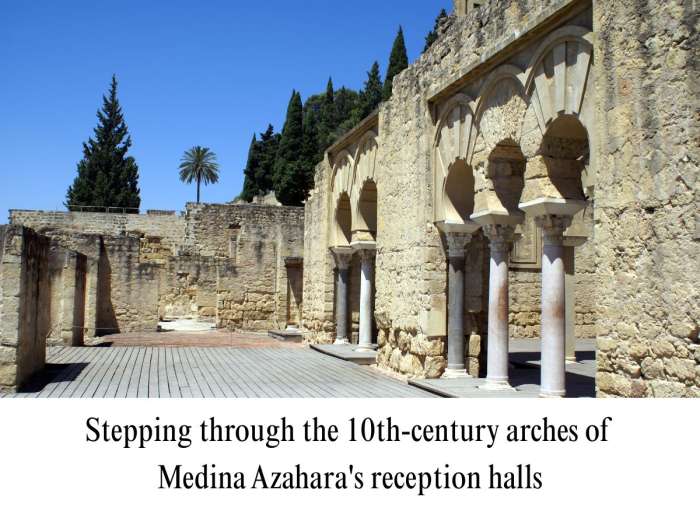
Your exploration through the upper palace terraces leads directly to the site’s undisputed masterpiece: the Salon Rico (Royal Reception Hall). Caliphs greeted foreign ambassadors beneath its soaring horse-shoe arches and gilded wooden ceilings. Artisans carved intricate tree-of-life motifs into the ivory-colored limestone walls, creating an illusion of woven stone tapestries. Standing inside this lavishly restored hall allows you to visualize the incredible splendor of royal medieval audiences.
The Power Grid: Dar al-Jund and the Royal Residences
Next, wander through the expansive open courts of the Dar al-Jund (House of the Army). This monumental hall served as the primary assembly area for high-ranking military commanders and state administrators. Walk past the massive stone pillars to admire the geometric layout of the surrounding courtyards. Nearby, the private residential quarters of the royal family reveal ancient bathhouses, private gardens, and subterranean service corridors that kept the palace running smoothly.
The Gateway to History: The Visitor Museum
Conclude your archaeological tour at the state-of-the-art underground museum located at the base of the hill. The facility houses an extraordinary collection of recovered artifacts, including carved marble capitals, glazed ceramics, and ancient bronze coinage minted on site. Watching the museum’s high-definition audiovisual presentation provides crucial context, showing how the terraced city functioned at its height.
Optimize Your Medina Azahara Travel Itinerary
To get the most out of your day trip to Medina Azahara, proper transportation logistics are essential. The site sits eight kilometers outside central Córdoba, requiring coordinated transit.
• Shuttle Bus & Fast-Track Entry: Entrance to the site is managed via the museum visitor center. Book your shuttle bus transfers and fast-track admission passes early on Klook to avoid delays.
• Self-Guided Audio Itineraries: To discover the royal court intrigues and archaeological secrets at your own pace, explore available audio walking tours on WeGoTrip.
Medina Azahara preserves a mesmerizing chapter of Andalusian history across a dramatic landscape. By visiting these historic ruins, you will step directly into the lost world of the Western Caliphate.
Join the Historical Journey
Want more historical insights, character sketches, and reflections on the creative writing journey? You can easily follow my regular updates on Medium.
The silent stones of the ancient world continue to speak across the millennia. They constantly urge us to study their structural triumphs and failures before our own modern empires face a similar decline.
Because this pillar post does not feature a comment box, the absolute best way to share your direct thoughts is through my Substack. Please subscribe there today to ask questions, join the debate, and connect with me directly!