
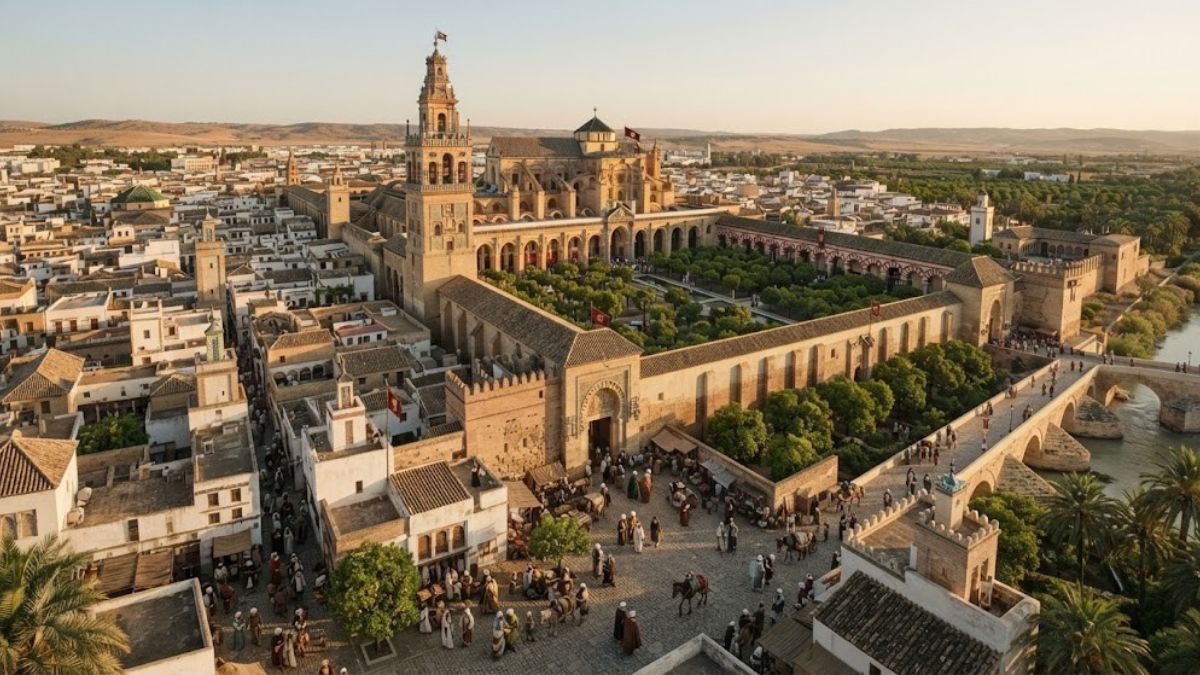
Discover the secrets of Córdoba’s legendary Mosque-Cathedral! Step through a breathtaking forest of red-and-white arches, wander the flower-dappled alleys of the Judería, and cross the ancient Roman Bridge. Uncover centuries of history with our ultimate self-guided walking route through Andalusian heritage.
The grand monuments of Al-Andalus shaped medieval Spain. Each historic city holds a piece of this fascinating era. Discover how Rome’s collapse paved the way for Moorish rule. Read the full story in From the Ashes of Rome: Spain’s Al-Andalus History.
Exploring Spain’s historic fortresses, lost cities, and ancient landscapes reveals a fascinating legacy. From iconic monuments like Granada’s Albaicín lookouts to Medina Azahara’s Caliphate ruins and Málaga’s Alcazaba fortress, each destination tells a story. Plan your next adventure with our historical guides to Seville’s Royal Alcázar, Ronda’s dramatic bridges, Catalonia’s coastal Tamarit Castle, day trips to Gibraltar, and Island routes through Gran Canaria and Tenerife’s Pyramids of Güímar.
Exploring the Mosque-Cathedral Arches, History, and Self-Guided Walking Route
Córdoba holds a unique, captivating charm that instantly transports travelers back to an era of grand empires. Located in the sun-drenched region of Andalusia, this city once served as the magnificent epicenter of Western civilization. At the very center of its labyrinthine streets stands the Mezquita-Catedral, a monumental wonder that bridges distinct worlds.
If you want to explore the deep layers of Spanish heritage, a dedicated walking tour through this area is essential. The surrounding historic quarter offers a brilliant mix of pristine courtyards, vibrant floral alleys, and ancient engineering. Let’s dive into the fascinating historical narrative of this area and map out the ultimate walking itinerary.
The Golden Threshold: A Brief History of Córdoba’s Sacred Center
Long before the current structure dominated the skyline, this specific ground witnessed dramatic cultural transformations. Originally, a Christian Visigothic basilica stood on the site, serving as the spiritual hub for the local population. However, everything changed dramatically in the eighth century during the rapid rise of the Muslim empire in Spain.
Emir Abd al-Rahman I purchased half of the church site to establish a grand place of worship for his growing community. He envisioned a brilliant architectural marvel that would rival the grandest structures of Damascus and Baghdad.
Subsequent rulers expanded the prayer hall over the centuries, turning it into the crowning jewel of the Caliphate of Córdoba. The city flourished as a global beacon of learning, where scholars, philosophers, and scientists advanced human knowledge. Then, the historical trajectory shifted once again in the year 1236 during the Christian Reconquista.
Instead of destroying the spectacular Islamic masterpiece, the victorious Christian monarchs chose to build a cathedral right in the middle of it. This bold architectural decision created the breathtaking hybrid monument that visitors marvel at today.
Unmissable Wonders: What to See Around the Historic Quarter
The Hypostyle Hall and the Mihrab
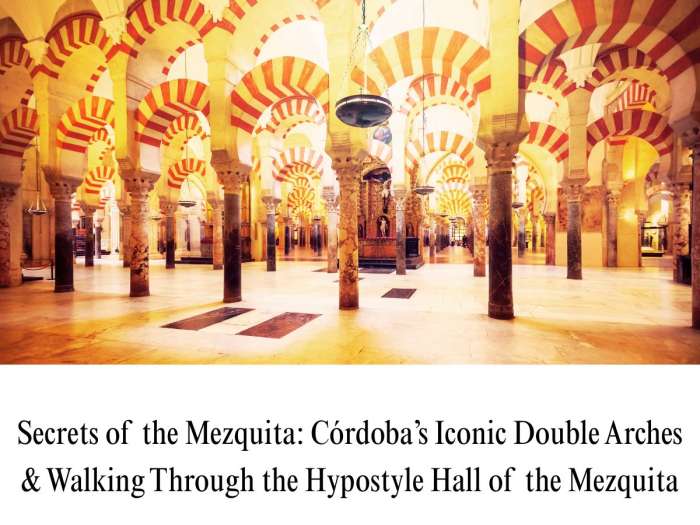
Your walking tour naturally begins inside the cool, vast interior of the Mezquita itself. As you step through the threshold, you will instantly encounter the legendary forest of columns. More than 800 pillars of jasper, onyx, and marble support the iconic red-and-white double arches. The immediate visual expanse feels almost infinite, creating a powerful sense of spiritual tranquility. Next, walk toward the back wall to witness the spectacular Mihrab, a deeply decorated prayer niche. Byzantine craftsmen created the glittering gold mosaics, which still catch the light beautifully after a thousand years. Finally, look upward into the central nave to see where the Renaissance cathedral choir emerges seamlessly from the Islamic arches.
The Floral Magic of Calleja de las Flores
After absorbing the grandeur of the cathedral, step out into the surrounding Judería, the historic Jewish quarter. Walk just a few paces to find the Calleja de las Flores, a narrow, cobblestone alleyway that remains a favorite for photographers. The whitewashed residential walls are completely adorned with dozens of brilliant blue flower pots filled with geraniums. As you walk to the very end of this tight passage and turn around, you get a perfectly framed view of the Mezquita’s dramatic bell tower rising above the rooftops. It provides an intimate, sensory contrast to the massive stone monuments nearby.
The Sentinel of the River: The Roman Bridge
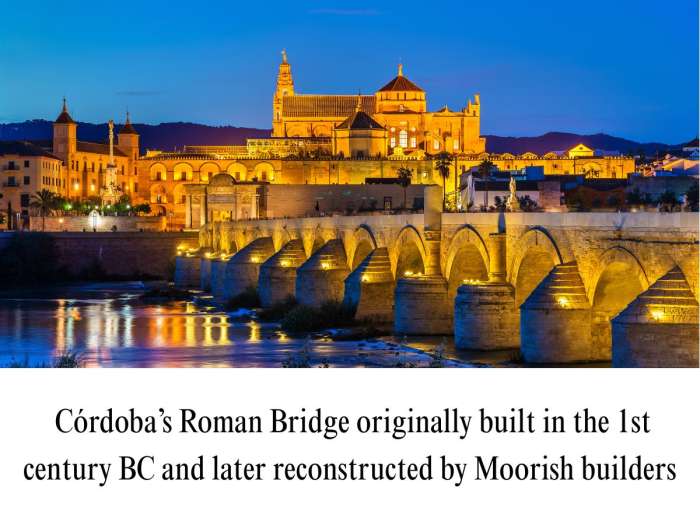
Conclude your historical walking loop by heading toward the banks of the Guadalquivir River. Here, you will encounter the massive Roman Bridge, which has spanned these waters since the first century BC. Although Islamic rulers reconstructed the arches extensively, the foundational structure highlights the city’s ancient roots. Walk across the pedestrian-only bridge at dusk to watch the sunset paint the stone walls in deep golden hues. At the far end, the defensive Calahorra Tower stands as a sturdy guardian, hosting an excellent museum dedicated to the peaceful coexistence of cultures during Córdoba’s golden age.
Optimize Your Andalusian Travel Itinerary
To get the most out of your historical exploration, you should carefully plan your logistics ahead of time. The narrow streets of the old quarter can become incredibly crowded during peak afternoon hours.
• The Mezquita: To avoid massive queues and secure standard or early-morning tickets, you can check options on Klook.
• Walking Tours: If you want a rich, self-guided experience that explains the deep theological evolution of the Judería at your own pace, you can browse audio itineraries on WeGoTrip.
Córdoba successfully preserves its multi-layered imperial narrative within a highly walkable footprint. By exploring these specific streets, you will discover the brilliant, living history behind the stone walls.
Join the Historical Journey
Want more historical insights, character sketches, and reflections on the creative writing journey? You can easily follow my regular updates on Medium.
The silent stones of the ancient world continue to speak across the millennia. They constantly urge us to study their structural triumphs and failures before our own modern empires face a similar decline.
Because this pillar post does not feature a comment box, the absolute best way to share your direct thoughts is through my Substack. Please subscribe there today to ask questions, join the debate, and connect with me directly!