
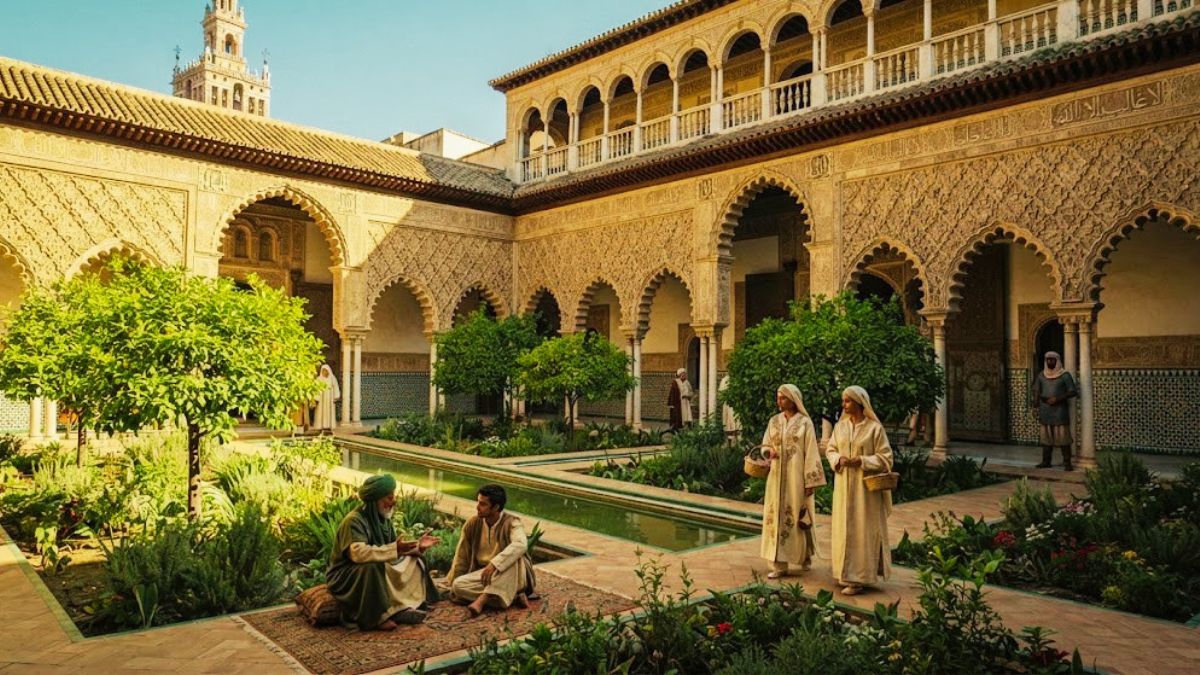
Step inside Europe’s oldest active royal palace! Seville’s Royal Alcázar showcases the absolute peak of Mudéjar art, blending intricate Islamic tilework with Christian royal ambition. Wander golden throne rooms, serene sunken courtyards, and subterranean baths with our essential guide to Andalusia’s most breathtaking palace complex.
The grand monuments of Al-Andalus shaped medieval Spain. Each historic city holds a piece of this fascinating era. Discover how Rome’s collapse paved the way for Moorish rule. Read the full story in From the Ashes of Rome: Spain’s Al-Andalus History.
Exploring Spain’s historic fortresses, lost cities, and ancient landscapes reveals a fascinating legacy. From iconic monuments like Córdoba’s grand Mezquita and Granada’s Albaicín lookouts to Medina Azahara’s Caliphate ruins and Málaga’s Alcazaba fortress, each destination tells a story. Plan your next adventure with our historical guides to Ronda’s dramatic bridges, Catalonia’s coastal Tamarit Castle, day trips to Gibraltar, and Island routes through Gran Canaria and Tenerife’s Pyramids of Güímar.
The Mudéjar Trail: A Day Trip Through Seville’s Royal Alcázar
Seville radiates a fiery, unmistakable energy that captures the heart of every visitor. Positioned along the majestic Guadalquivir River in Andalusia, this historic city holds centuries of imperial drama. At the absolute center of its historic core stands the Royal Alcázar of Seville, a breathtaking palace complex where distinct worlds intertwine.
This architectural treasure represents the absolute pinnacle of Mudéjar style—a unique blending of Islamic artistic traditions with Christian royal ambition. If you want to experience the true splendor of Spanish history, traversing this magical palace ground is essential. Let’s explore the rich historical narrative of this royal residence and highlight its most spectacular features.
The Royal Crucible: A Brief History of the Royal Alcázar
Long before the current palaces dominated the gardens, ancient Roman and Visigothic foundations occupied this strategic site. However, the palace complex truly began its imperial evolution during the 10th century under the Umayyad Caliphs. Rulers constructed a sturdy governor’s fortress called the Al-Muwarak to secure their administrative power in southern Spain. Succeeding Islamic dynasties continuously expanded the grounds, adding fortified walls, ornate halls, and lush courtyard sanctuaries.
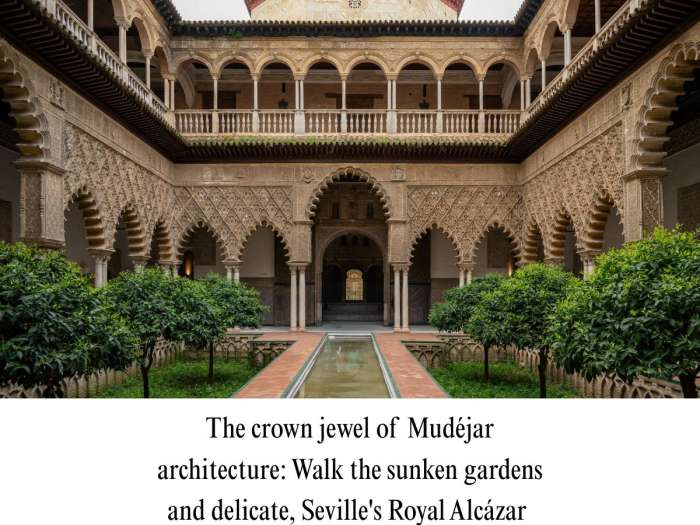
Everything shifted dramatically during the 14th century following the Christian Reconquista of Seville. Instead of leveling the magnificent Moorish structures, King Pedro I made a revolutionary decision. He hired master Islamic craftsmen from Granada and Toledo to design a brand-new royal residence directly over the older foundations. This brilliant collaboration gave birth to the Palacio del Rey Don Pedro, the crown jewel of Mudéjar architecture. Subsequent Spanish monarchs added Renaissance and Baroque elements, creating the oldest royal palace still in active use in Europe today.
Unmissable Wonders: What to See and Do at the Alcázar
The Golden Heart: Patio de las Doncellas
Your journey through the palace complex naturally leads to the legendary Courtyard of the Maidens (Patio de las Doncellas). As you step beneath the intricate plaster arches, a long, reflective sunken pool stretches out before you. Islamic artisans crafted the lower level with exquisite tilework and delicate geometry, while Christian rulers added Renaissance upper galleries centuries later. Walk along the surrounding marble porticos to examine the mind-boggling detail carved into the walls. The delicate play of sunlight across the quiet water creates a serene, almost hypnotic atmosphere for travelers.
Royal Grandeur: Salón de Embajadores
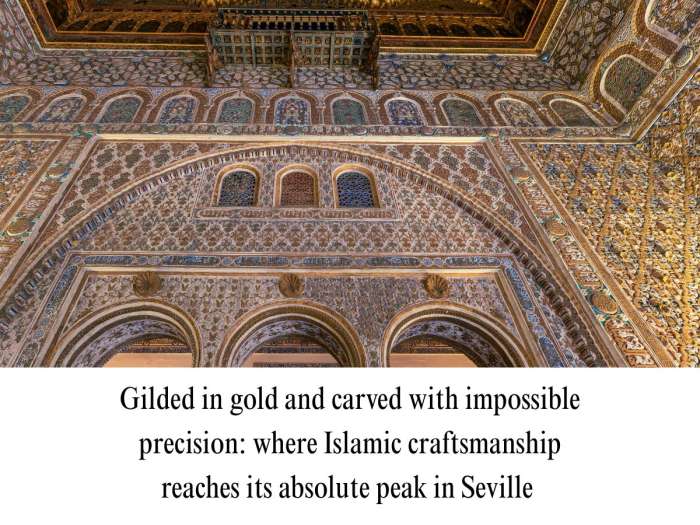
Next, venture deeper into the complex to discover the magnificent Hall of Ambassadors (Salón de Embajadores). This grand throne room served as the primary reception hall where King Pedro I greeted foreign dignitaries. The absolute highlight of this room sits directly above your head: a soaring wooden dome gilded in brilliant gold leaf. The dome symbolizes the vaulting heavens, decorated with intricate star patterns that dazzle the eyes. Standing beneath this golden canopy allows you to feel the incredible wealth and prestige of medieval monarchs.
The Mythic Underground: Baños de Doña María de Padilla
After absorbing the palace interiors, descend into the cool, vaulted subterranean chambers below the patio grounds. Here, you will find the legendary Baths of Lady María de Padilla. Rainwater fills the long stone basin, creating a perfect mirror that reflects the gothic cross-ribbed arches above. The stillness of the subterranean water offers a cooling sanctuary from the Andalusian heat outside, accompanied by an eerie, enchanting beauty.
Oasis of Kings: The Royal Gardens
Conclude your historical excursion by stepping out into the sprawling, multi-tiered gardens. These expansive grounds seamlessly combine Islamic irrigation canals with Italian Renaissance fountains and labyrinths. You can stroll through shady palm groves, wander past fragrant orange trees, and listen to the calls of free-roaming peacocks. Don’t forget to walk along the elevated Gallery of the Grotesco to catch a sweeping overhead view of the entire green paradise.
Optimize Your Seville Travel Itinerary
To get the most out of your day trip through the Royal Alcázar, proper planning is absolutely essential. The entrance lines routinely stretch around the historic perimeter walls during peak hours.
• Fast-Track Tickets & Passes: Secure your timed entry passes well in advance via Klook to bypass the massive ticket lines outside.
• Self-Guided Audio Itineraries: To uncover the fascinating palace court intrigues and architectural secrets at your own pace, check available self-guided audio tours on WeGoTrip.
Seville preserves its royal heritage with incredible grandeur and timeless elegance. By walking the Mudéjar Trail, you will discover the living artistic bridge that unites Andalusia’s rich historical past.
Join the Historical Journey
Want more historical insights, character sketches, and reflections on the creative writing journey? You can easily follow my regular updates on Medium.
The silent stones of the ancient world continue to speak across the millennia. They constantly urge us to study their structural triumphs and failures before our own modern empires face a similar decline.
Because this pillar post does not feature a comment box, the absolute best way to share your direct thoughts is through my Substack. Please subscribe there today to ask questions, join the debate, and connect with me directly!