
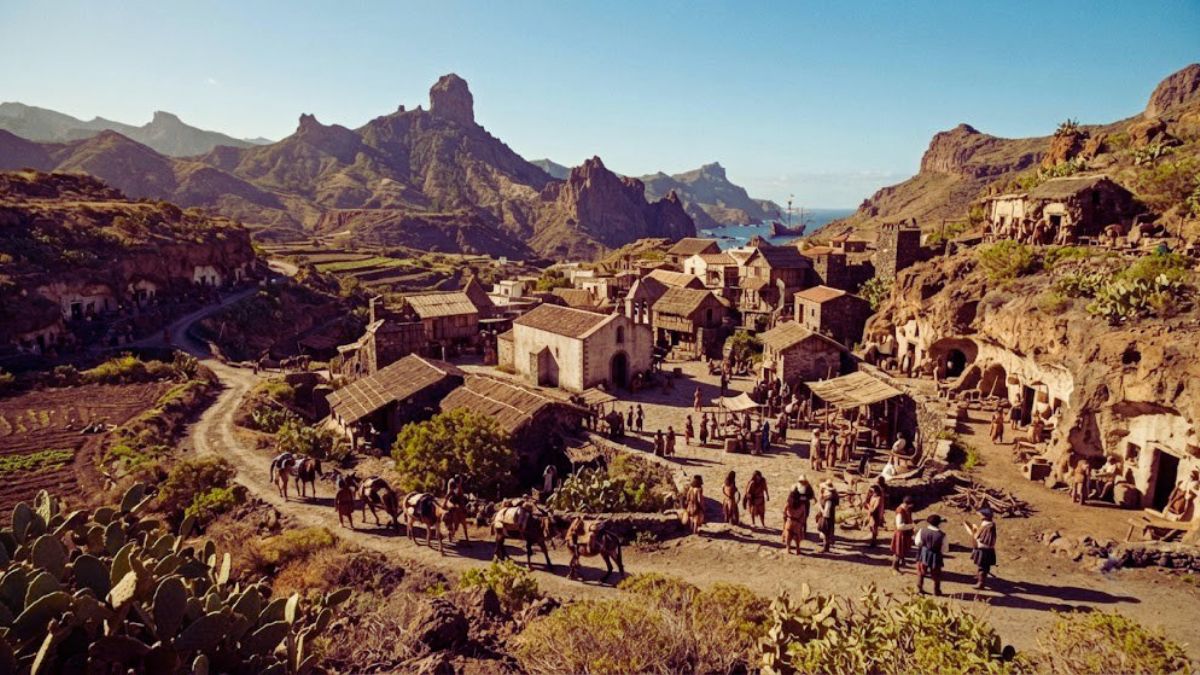
Follow in the footsteps of legendary explorers! Gran Canaria’s volcanic landscapes served as Christopher Columbus’s final stop before crossing the Atlantic. Drive winding mountain routes from historic Vegueta mansions and ancient indigenous cave temples to the soaring heights of Roque Nublo with our ultimate Canarian historical road trip guide.
The grand monuments of Al-Andalus shaped medieval Spain. Each historic city holds a piece of this fascinating era. Discover how Rome’s collapse paved the way for Moorish rule. Read the full story in From the Ashes of Rome: Spain’s Al-Andalus History.
Exploring Spain’s historic fortresses, lost cities, and ancient landscapes reveals a fascinating legacy. From iconic monuments like Córdoba’s grand Mezquita and Granada’s Albaicín lookouts to Medina Azahara’s Caliphate ruins and Málaga’s Alcazaba fortress, each destination tells a story. Plan your next adventure with our historical guides to Seville’s Royal Alcázar, Ronda’s dramatic bridges, Catalonia’s coastal Tamarit Castle, day trips to Gibraltar, and Island routes through Tenerife’s Pyramids of Güímar.
Footsteps of Explorers: A Historical Road Trip Across Gran Canaria
Gran Canaria captivates travelers with its dramatic geological contrast, earning it the famous title of a “miniature continent.” Soaring volcanic peaks, deep green ravines, and golden coastal dunes define this mesmerizing Atlantic island. However, beyond its stunning natural scenery lies a central chapter in world exploration.
For centuries, this island served as the final European refueling stop for bold maritime navigators venturing across unknown oceans. If you want to experience the true spirit of discovery, taking a historical road trip across these mountain routes is essential. Let’s dive into the fascinating narrative of Gran Canaria’s famous explorers and map out your ultimate driving itinerary.
The Atlantic Gateway: A Brief History of Gran Canaria
Long before European caravels anchored in its bays, the indigenous Canarii people inhabited these rugged volcanic valleys. They carved intricate cave dwellings into sheer cliff faces and built sophisticated granaries high in the mountain walls.
Everything changed dramatically during the late 15th century when Spanish forces conquered the island after years of fierce resistance. Rulers established the historic settlement of Real de Las Palmas, transforming it into a vital maritime hub. In August 1492, Christopher Columbus sailed his small fleet into the harbor to repair the Pinta’s broken rudder before setting off into the uncharted Atlantic. This historic stopover forever linked Gran Canaria to the Age of Discovery. Succeeding generations of global explorers, merchants, and scientists followed the same trade winds, turning the island into an enduring crossroad of global history.
Unmissable Stops: What to See and Do on Your Road Trip
The Cradle of Discovery: Vegueta and the Casa de Colón
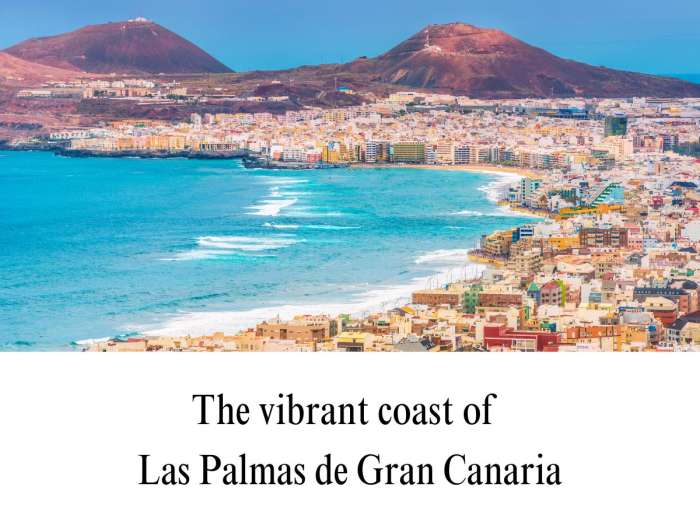
Your road trip naturally begins in Las Palmas within the cobblestone district of Vegueta. Step through the carved wooden doorways of the Casa de Colón, an exquisite example of 15th-century Canary architecture where Columbus reportedly stayed during his visit. Inside, fascinating navigation maps, ancient nautical instruments, and caravel models bring the excitement of early oceanic voyages back to life. After exploring the museum, walk across the quiet plaza to admire the grand twin towers of the Cathedral of Santa Ana.
Sacred Heights: The Indigenous Sanctuary of Risco Caído and Roque Nublo
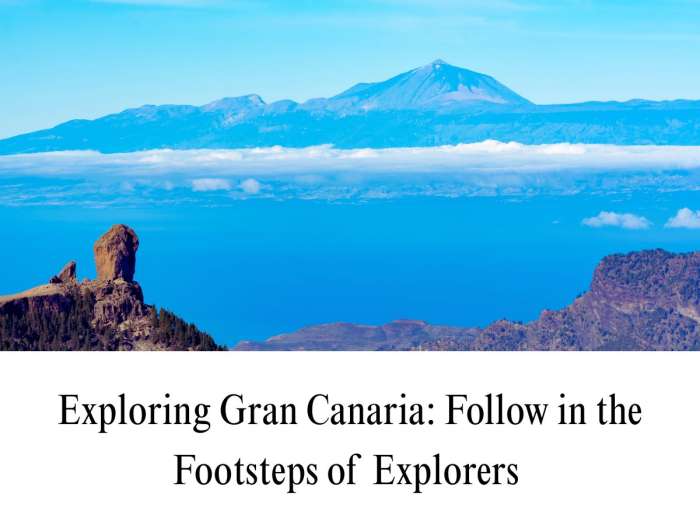
Next, steer your vehicle inland along winding mountain roads toward the island’s central volcanic summit. As you ascend into the cloud forest, stop to visit the UNESCO World Heritage site of Risco Caído. This ancient sacred complex features cave temples with carved astronomical skylights that align perfectly with seasonal sunlight. Afterward, hike the short trail to the base of Roque Nublo, an iconic 80-meter volcanic monolith that ancient priests venerated as a sacred pillar linking earth and sky.
The Colonial Jewel: The Terraced Valleys of Teror and Arucas
Conclude your historical circuit by descending through the northern agricultural valleys toward the picturesque town of Teror. Famous for its colorful whitewashed mansions and ornate wooden balconies, this historic town preserves authentic island traditions. Walk along the quiet stone streets to visit the Basilica of Our Lady of the Pine, the spiritual heart of the island. Before finishing your loop, sample traditional chorizo de Teror at a local family-run tapas bar while enjoying the serene mountain atmosphere.
Optimize Your Gran Canaria Travel Itinerary
To get the most out of your historical road trip, preparing your driving logistics and mountain routes in advance is essential. The island’s inner switchback roads demand focused driving and flexible timing.
• Car Rentals & Fast-Track Passes: Vehicle rentals book out quickly during peak travel months. Reserve your vehicle and key museum passes early via Klook to guarantee smooth logistics.
• Self-Guided Audio Itineraries: To discover the fascinating explorer legends and hidden indigenous secrets at your own pace, explore available audio driving tours on WeGoTrip.
Gran Canaria preserves its historic legacy of exploration across a spectacular, mountain-rimmed landscape. By driving these historic routes, you will follow directly in the footsteps of the navigators who changed the world.
Join the Historical Journey
Want more historical insights, character sketches, and reflections on the creative writing journey? You can easily follow my regular updates on Medium.
The silent stones of the ancient world continue to speak across the millennia. They constantly urge us to study their structural triumphs and failures before our own modern empires face a similar decline.
Because this pillar post does not feature a comment box, the absolute best way to share your direct thoughts is through my Substack. Please subscribe there today to ask questions, join the debate, and connect with me directly!